
1. INTRODUCTION
Citric acid is the most consumed organic acid in the world and is widely used in the beverage, food, cosmetic, pharmaceutical, and agricultural industries. Citric acid is an approved food additive for use as a preservative in food production and is authorized as a preservative in feed and feed additives, being an alternative to antibiotics and growth stimulants [1].
Because of its wide application in industry, the annual production of citric acid reaches 2 million tons [2,3]. Many microorganisms, including bacteria (Bacillus spp., Corynebacterium spp., Brevibacterium spp., Pseudomonas spp., and Klebsiella spp.), fungi (Aspergillus niger, Aspergillus flavus, Aspergillus awamori, Aspergillus luchensis, and Aspergillus nidulans), and yeasts (Candida spp. and Yarrowia spp.), are used to produce citric acid. However, due to the large amount of isocitric acid produced as a by-product of yeast fermentation, most of the world’s citric acid is produced by deep fermentation [2,4].
The fungus A. niger, in combination with fermentable sugars, is able to synthesize large amounts of citric acid on an industrial scale compared to other microorganisms. It is easy to handle, can ferment a wide variety of inexpensive feedstocks, and consistently produces high yields [5]. Some substrates used as a carbohydrate source provide high carbon levels in the medium, which are necessary for the production of citric acid by the fungus A. niger [6].
The limiting factor in the production of organic acids, including citric acid, is the high cost of nutrient media and their importation. Therefore, the relevant problem today is the search for inexpensive ingredients to create nutrient media that provide a high yield of the target product.
Food waste, which contains a large amount of organic matter but is dumped in landfills, causing serious damage to the environment and ecology, can be used as such an ingredient. For example, soybean processing generates a large number of by-products such as okara, soybean hulls, soybean meal, and soybean molasses that are not properly processed [7]. Soybean molasses, a by-product of soybean oil extraction, is a resource with high biotechnological potential due to its unique chemical composition. It contains significant amounts of carbohydrates, proteins, lipids, and biologically active compounds [8].
The chemical composition of soybean molasses varies greatly depending on the soybean variety, growing conditions, location, and year of cultivation. Soybean molasses is characterized by high dry matter content (up to 85%), of which 55–65% is carbohydrates, crude protein (up to 7%), and minerals (up to 7%) [9]. Soybean molasses contains a large number of fermentable sugars, mainly oligosaccharides of the sucrose and raffinose families and small amounts of monosaccharides: glucose, fructose, and galactose [8,10-13].
Soybean molasses is considered a promising enzymatic substrate for biotechnological production due to its high concentration of soluble carbohydrates [8,15]. The study [8] shows that soybean molasses is a good substrate for cultivating the microorganisms Mucor circinelloides, Aspergillus niger, Propionibacterium acidipropionici, and Aureobasidium pullulans and the biosynthesis of organic compounds for the food industry, bioplastic production, and bioethanol production [8,13].
Soybean molasses in pure form or after pre-treatment can be used as a feedstock for microbial production of bioproducts, e.g., bioethanol [13-15], biomethane [9], malic acid [16], acetic acid [13,17], and citric acid [8]. Due to the fact that it is rich in carbohydrates, it can also be considered a component of nutrient media for the cultivation of microorganisms in the production of various organic acids (citric, propionic, and malic acids) [20]. However, it should be noted that such use of soybean molasses is isolated and not widespread. Soybean molasses is mainly discarded as waste or used as raw material, but not efficiently enough [8].
Hence, this study aims to investigate the possibility of using soybean molasses to intensify the synthesis of citric acid by A. niger.
The novelty and practical value of this study lie in the fact that a modification of the composition of the nutrient medium for cultivation of the A. niger strain (F-1270), which promotes the maximum synthesis of citric acid, was performed. This study shows that soybean molasses, as well as cane molasses, can be used as a component of nutrient media in the biotechnology industry. It is known that cane molasses is the most studied source for obtaining citric acid [19-21]. However, cane molasses is not a raw material widely used in the Russian Federation, since cane grows only in the southern part of the country, in particular in the Krasnodar Krai, and it is not the main source for the industrial production of sugar and molasses [24]. Soybean molasses is a by-product of industrial soybean processing, particularly in the production of soy protein concentrate and isoflavonoids. Its quantity has recently increased due to growth in processing volumes [22]. In particular, it was noted that it was used only as a source of feed for livestock. However, there are limitations to its use as feed, as the anti-nutritional factors (oligosaccharides) it contains are not digestible by mammals [8,23]. This is why soybean molasses is stored as waste in large quantities and has a very low market value [23]. A viable alternative for the use of underutilized soybean molasses is its application in biotechnology for the production of organic substances through fermentation. However, it has been established that the use of Russian-produced soybean molasses for modifying nutrient media in the biotechnological production of citric acid has not been sufficiently studied [24]. Therefore, this study examined the potential use of soybean molasses for culturing the A. niger strain (F-1270) for its potential application as a substrate in the production of citric acid. Our hypothesis was that soybean molasses, including Russian-produced molasses, such as cane molasses, can support the growth of microorganisms and stimulate the production of important metabolites that can contribute to the country’s economic growth and enable the creation of new cascade technology in the future.
2. MATERIALS AND METHODS
2.1. Chemical Reagents Used in Research
The objects of research were fungal strain A. niger (F-1270) (Kurchatov Institute, Russia) and soybean molasses (Sodrugestvo Group, Russia). The following chemical reagents and culture media were used at different stages of the scientific research: Czapek medium (BioCompass-S, Russia), trifluoroacetic acid (CAS 76-05-1, 99.8%, CDH, India), acetonitrile (CAS 75-05-8, 99.9%, Carlo Erba Reagents, Italy), sucrose (CAS 57-50-1, Duchefa Biochemie, Netherlands), D(+)-glucose (CAS 50-99-7, Beijing, China), stachyose tetrahydrate powder (CAS 54261-98-2, China), D(+)-raffinose pentahydrate (CAS 17629-30-0, KhimMed, Russia), D(-)-fructose for biochemistry (Merck 1.04007.0250, Germany), 3,5-dinitrosalicylic acid (CAS 609-99-4, Himedia, India), citric acid (Pallav Chemicals, India), and ammonium acetate (Reakhim, Russia), sulfuric acid (Reakhim, Russia), sodium hydroxide (Reakhim, Russia).
2.2. Fungal Culture and Maintenance
The fungal strain A. niger (F-1270) was used in the studies. A. niger grew well at low pH and is resistant to high concentrations of carbohydrates and temperature fluctuations. It is characterized by metabolic plasticity, which allows it to achieve significant selectivity of citric acid biosynthesis [21].
The A. niger strain (F-1270) was cultivated on Czapek medium. The cultivation temperature was 26°C. The cultivation process continued for 7 days.
Our laboratory is licensed to work with microorganisms of pathogenicity groups III and IV (License No. 39.?C.02.001.?.000008.03.08 dated March 21, 2008). All research involving the microorganism was conducted in accordance with sterility and sanitary safety regulations.
2.3. Soybean Molasses
Soybean molasses was used to develop a culture medium for citric acid synthesis.
Steam sterilization was used for the preliminary treatment of soybean molasses samples. Soybean molasses with a pH of 7.3 was used for sterilization. For this purpose, molasses was sterilized in a horizontal autoclave TUT-3850 ML (Tuttnauer Ltd., Israel) for 20 min at 121°C and left at room temperature until completely cooled [25]. After sterilization, the pH of the soybean molasses sample decreased slightly (to pH = 6.8) due to acid release [26], which led to an increase in the growth rate of the microorganism A. niger. Further, soybean molasses was used to prepare nutrient media for studies.
2.4. Determination of Carbohydrate Content in Soybean Molasses
The content of carbohydrates in molasses was analyzed using high-performance liquid chromatography (HPLC) [27] on a liquid chromatograph LC-20AB “Shimadzu” Prominence (Shimadzu Corporation (Japan)) with a binary pump and diode array detector SPD-M20A. Chromatography was performed using a Zorbax C18 column (Agilent) 4.6 × 250 mm, 5 μm. Gradient elution with increasing non-polar solvent: Eluent A – trifluoroacetic acid solution in bidistilled water, B – acetonitrile. The flow rate was 1 mL/min, and the analytical wavelength was 254 nm. The molasses was extracted with an aqueous ethanol solution under heating and constant stirring. Then it was centrifuged and filtered through a 0.22 μm filter syringe. The components were identified by retention times and spectra of individual standard substances. Sucrose (CAS 57-50-1), D(+)-glucose (CAS 50-99-7), stachyose tetrahydrate powder (CAS 54261-98-2), D(+)-raffinose pentahydrate (CAS 17629-30-0), and D(-)-fructose for biochemistry (Merck 1.04007.0250). The concentration of compounds was calculated using calibration curves plotted in the concentration range of 1–100 μg/mL. The components were identified based on retention times and spectra of individual standard substances. The error of the analysis was no more than 5%. All measurements were performed in triplicate.
The data for the method validation [Table 1] confirm the suitability of the method for studying the carbohydrate content in soybean molasses.
Table 1: Method validation parameters.
| Standard | Accuracy (%) | Repeatability (%R.S.D., n=6) | Intermediate accuracy (% R.S.D., n=9) | Detection limit (mg/mL) | Limit of quantification (mg/mL) | Linear range (mg/mL) | Coefficient of determination (R2) |
|---|---|---|---|---|---|---|---|
| Sucrose | 97.7 | 3.2 | 3.3 | 0.3 | 1.0 | 1–100 | 0.9981 |
| Glucose | 98.2 | 3.0 | 3.7 | 0.3 | 1.0 | 1–100 | 0.9987 |
| Stachyose | 97.6 | 2.7 | 3.6 | 0.3 | 1.0 | 1–100 | 0.9998 |
| Raffinose | 97.8 | 3.1 | 3.7 | 0.3 | 1.0 | 1–100 | 0.9996 |
2.5. Study of Physicochemical Parameters of Soybean Molasses
To estimate the dry matter content, a sample of soybean molasses was dried at a constant temperature of 102°C in a drying oven SHS-80-01 (Smolensk SKTB, Russia) and weighed on an analytical balance AND BM-252G (AND, Japan) [28].
The mass fraction of reducing agents was studied according to the official method (GOST R 52304-2005) [29]. The method is based on the oxidation of reducing substances with an alkaline solution of copper compound and the determination of the amount of formed copper oxide using the iodometric method [30].
The mass fraction of the sum of digestible (fermentable) sugars in soybean molasses was estimated using the dinitrosalicylic acid spectrophotometric method on a UNICO 1204 spectrophotometer (United Products and Instruments, USA) [30].
The mass fraction of protein was studied by the Kjeldahl titrimetric method, which consists of mineralizing the organic matter of the sample by boiling sulfuric acid in the presence of a catalyst with the formation of ammonium sulfate, adding excess sodium hydroxide to the cooled mineralizate to extract ammonium, distilling and titrating the extracted ammonia, calculating the mass fraction of nitrogen in the test sample, and converting it to the mass fraction of crude protein [32].
The total ash content in soybean molasses was determined using the official method based on the complete combustion of the organic part of the sample under study and subsequent weight determination of the mass fraction of ash [30].
Crude fat content in soybean molasses was studied according to the official method (GOST 13496.15-2016) [31].
The reliability of the results is determined by the methods used to obtain them.
2.6. Cultivation of Microorganisms
The fungal strain A. niger (F-1270) was used in the studies. A. niger strain (F-1270) was cultivated on Czapek medium. The cultivation temperature was 26°C. The medium was sterilized in an autoclave (Shimadzu, Japan) for 20 min at 121°C. Fungal and citric acid concentrations were determined on the 7th day of cultivation [19].
All measurements were performed in triplicate.
2.7. Optimization of Nutrient Medium Chemical Composition
Optimization of the chemical composition of the nutrient medium was carried out using mathematical modeling of a full-factor experiment. Variable factors were temperature (X1), pH (X2), and soybean molasses content in the nutrient medium (X3). Each of the factors varied at three levels. Controlled parameters were citric acid concentration (mg/mL) and fungal biomass in the fermentation medium (number of cells ×107/mL). The planning matrix is presented in Table 2. The temperature and pH range depend on the strain used. According to the manufacturer’s passport, the cultivation temperature of the A. niger strain (F-1270) was 26°C, and according to literature data, A. niger was used for industrial biosynthesis of organic acids at a temperature range of 32–35°C [32-34]. The pH range (2.0–6.0) and soybean molasses content were selected based on available published data [4,32,33,35,36].
Table 2: Planning matrix.
| Factor level | Factors | ||
|---|---|---|---|
| X1 | X2 | X3 | |
| t, °C | pH | molasses, g/L | |
| Lower level (-) | 27.0 | 2.0 | 10.0 |
| Upper level (+) | 36.0 | 6.0 | 20.0 |
| Control (0) | 30.0 | 4.0 | 15.0 |
All measurements were performed in triplicate.
2.8. Evaluation of A. niger strain (F-1270) biomass accumulation
Fungal biomass (fungal growth) was measured spectrophotometrically using SmartSpec Plus (BioRad Laboratories Inc., USA). For this purpose, 2 mL of culture medium containing microorganisms was poured into a cuvette and measured at a wavelength of 600 nm [37]. The results were recorded and analyzed using SpectraSuite software (Ocean Optics, Ostfildern, Germany). The absorption spectrum of the microbial cell suspension had a maximum absorption in the near-UV region, due to the presence of protein molecules, and a peak in the infrared region, due to the presence of carbohydrates. In the range from 400 to 900 nm, the absorption spectrum directly depended on the concentration of fungal cells in the suspension. To determine cell concentration, calibration curves were plotted, and fungal cell content was determined [38]. All measurements were performed in triplicate.
2.9. Determination of Citric Acid Concentration in Culture Medium
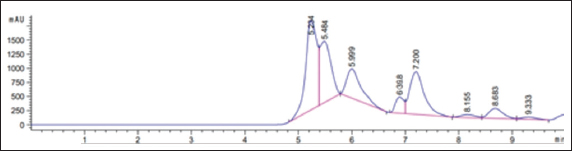
The HPLC method was used to determine the citric acid content. For this purpose, citric acid samples were centrifuged (10,000 rpm) using a Beckman OPTIMA XPN-100 ultracentrifuge (Beckman Coulter, USA), and the supernatant was analyzed by HPLC using a Shimadzu LC20AD HPLC system (Shimadzu, Japan). The HPLC method was performed in isocratic mode using an eluent of ammonium acetate (0.8 g/L, pH 4.2–4.3). Under these conditions, the retention time of citric acid was 7.200 min.
The study was conducted in three repetitions.
2.10. Statistical Analysis
The data obtained were statistically processed using SigmaPlot 12.3 software (Systat Software GmbH, Erkrath, Germany). The data were expressed as mean values ± standard deviations. All experiments were performed in triplicate. A full factorial experiment was conducted to study the effect of temperature, pH, and molasses content on citric acid yield and biomass accumulation of A. niger strain F-1270. One-way analysis of variance was performed to evaluate statistically significant differences between the mean values of citric acid and biomass of A. niger strain F-1270. Before the dispersion analysis, the data were examined for normal distribution using the Shapiro–Wilk test, as well as for homogeneity of variance. Tukey’s test was used to determine differences between mean values at a significance level of P < 0.05.
3. RESULTS
3.1. The Carbohydrate Composition of Soybean Molasses
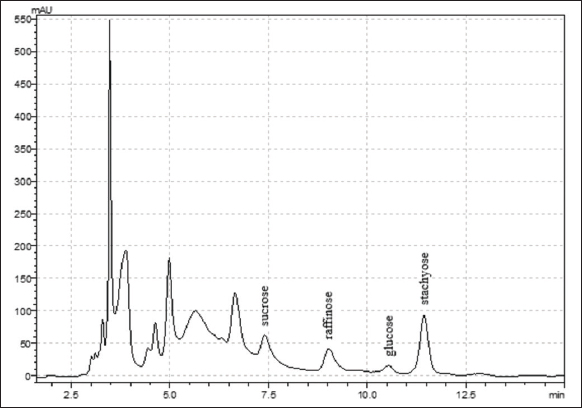
To assess the possibility of using soybean molasses as a component of the nutrient medium for the A. niger strain (F-1270), the carbohydrate composition of the substrate was investigated. The results of the study of the carbohydrate composition of soybean molasses are presented in Figure 1 and Table 3. According to the results presented, soybean molasses samples were enriched with carbohydrates such as stachyose (11.81 ± 0.32% on an absolute dry weight basis), raffinose (2.44 ± 0.07% on an absolute dry weight basis), sucrose (1.68 ± 0.04% on an absolute dry weight basis), and glucose (0.070 ± 0.001% on an absolute dry weight basis).
 | Figure 1: Results of studying the carbohydrate composition of soybean molasses. [Click here to view] |
Table 3: Carbohydrate content in soybean molasses samples.
| Indicator | Value |
|---|---|
| Mass fraction of sucrose, % ADM | 1.68±0.04 |
| Mass fraction of glucose, % ADM | 0.070±0.001 |
| Mass fraction of stachyose, % ADM | 11.81±0.32 |
| Mass fraction of raffinose, % ADM | 2.44±0.07 |
| Mass fraction of fructose, % ADM | Below detection limit |
The data were presented as the mean value with standard deviation (n=3).
3.2. The Physicochemical Parameters of Soybean Molasses
The results of the analysis of the physical and chemical indicators of the soybean molasses samples studied, presented in Table 4, showed that the content of reducing substances was 43.86 ± 1.31%, and the content of digestible (fermentable) sugars did not exceed 17.82 ± 0.53% in total. The study also revealed that the soybean molasses samples contained insignificant amounts of protein (5.90 ± 0.17%) and fat (2.73 ± 0.08%).
Table 4: Physicochemical parameters of soybean molasses.
| Indicator | Value |
|---|---|
| Dry matter content, % | 65.22±1.95 |
| Mass fraction of reducing agents, % ADM | 43.86±1.31 |
| Mass fraction of the sum of digestible (fermentable) sugars % ADM | 17.82±0.53 |
| Protein mass fraction, % | 5.90±0.17 |
| Mass fraction of fat, % per ADM | 2.73±0.08 |
| Ash, % | 5.87±0.17 |
The data were presented as the mean value with standard deviation (n=3).
3.3. Selection of Cultivation Parameters of A. niger Strain F-1270 (Optimization of the Chemical Composition of the Nutrient Medium; Assessment of Biomass Accumulation)
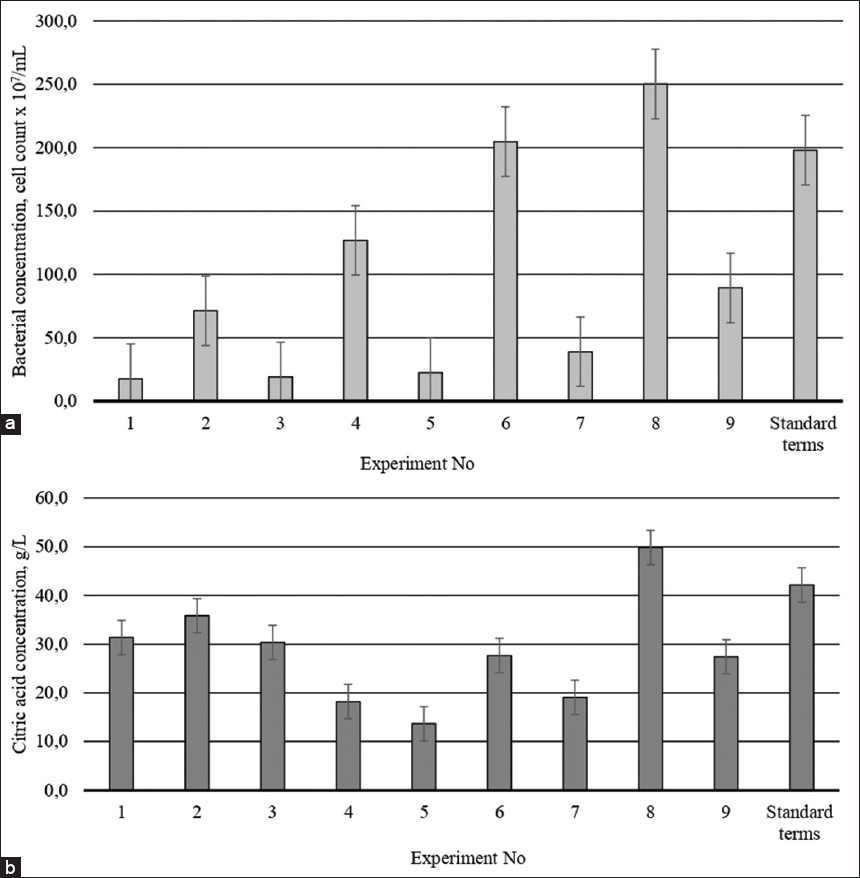
The first stage of the study examined the ability of the A. niger F-1270 strain to grow and synthesize citric acid from simple sugars in molasses. The yield of citric acid was evaluated when the strain was cultivated under standard conditions on a classic nutrient medium (Czapek medium). The results of the analysis showed that at a sucrose concentration of 30 g/L, a cultivation temperature of 26°C, a pH of 4.0, and a cultivation period of 7 days, the citric acid yield of A. niger strain F-1270 was 42.14 g/L, and the fungal concentration was 198 cell count × 107/mL [Figure 2].
 | Figure 2: Results of the factorial experiment in graphical format: (a) Bacterial concentration; (b) citric acid concentration. All values in the columns differed significantly from each other (P < 0.05, Tukey test). [Click here to view] |
Next, this study focused on finding a way to replace sucrose in the culture medium with soybean molasses as a source of simple sugars for cultivating the A. niger strain.
The mathematical planning of the experiment was used to determine the composition of the nutrient medium and the maximum yield of citric acid and A. niger biomass. Studies showed that fungi are able to grow actively in the presence of simple sugars from soybean molasses and use them for the synthesis of citric acid. Therefore, the research aimed to optimize the cultivation parameters of A. niger strain F-1270 using soybean molasses to increase the yield of citric acid [Table 5].
Table 5: Results of a full factorial experiment for A. niger strain F-1270.
| Experiment No. | X1 | X2 | X3 | Yav | Zav |
|---|---|---|---|---|---|
| 1 | 36.0 | 2.0 | 10.0 | 17.57±0.52 | 31.4±1.16 |
| 2 | 36.0 | 6.0 | 10.0 | 71.25±2.85 | 35.9±1.18 |
| 3 | 36.0 | 6.0 | 20.0 | 19.00±0.85 | 30.4±1.27 |
| 4 | 27.0 | 6.0 | 20.0 | 126.83±3.29 | 18.2±0.68 |
| 5 | 27.0 | 6.0 | 10.0 | 22.33±0.89 | 13.7±0.57 |
| 6 | 27.0 | 2.0 | 20.0 | 204.73±8.63 | 27.7±0.99 |
| 7 | 27.0 | 2.0 | 10.0 | 38.95±1.74 | 19.1±0.84 |
| 8 | 36.0 | 2.0 | 20.0 | 250.28±7.66 | 49.8±1.49 |
| 9 (Control) | 30.0 | 4.0 | 15.0 | 89.30±3.39 | 27.4±1.12 |
Y: Fungal concentration, cell count×107/mL; Z – citric acid concentration, mg/mL. Yav: Sample of average values by samples Yi, Zav: Sample of average values by samples Zi, (i=1, 2, 3). The data were presented as the mean value with standard deviation (n=3)
According to the data [Figure 2], the maximum yield of the target product and strain biomass was observed at the technological parameters of experiment 8. Furthermore, the results of the multifactorial experiment allowed for the derivation of regression equations [Table 6] and the development of experimental models [Tables 7 and 8], which indicated that temperature, pH, and molasses concentration were significant cultivation factors for the biomass accumulation of A. niger strain F-1270. Thus, the highest concentration of A. niger strain F-1270 was obtained at a temperature of 36°C, a pH of 2.0, and a soybean molasses concentration of 20 g/L. It was found that temperature was the only significant factor affecting citric acid accumulation by A. niger strain F-1270. The highest concentration of citric acid was obtained at a temperature of 36°C.
Table 6: Regression equations for Aspergillus niger strain F-1270.
| Parameter | Regression equations | R2 |
|---|---|---|
| Fungal concentration | Y=143.86+199.40????1−64. | 0.9165 |
| Concentration of citric acid | Z=2.82+0.59????1 | 0.9117 |
????1: Temperature, °C; ????2: pH, ????3: Content of soybean molasses in nutrient medium, g/L, R2: Determination coefficient (the model is satisfactory at>0.5).
Table 7: Dispersion analysis of the regression equation for the citric acid production process (R2=0.9117).
| Parameters | SS | df | MS | F | P |
|---|---|---|---|---|---|
| (1) X1 | 591.6800 | 1 | 591.6800 | 16.09904 | 0.015965 |
| (2) X2 | 111.0050 | 1 | 111.0050 | 3.02034 | 0.157221 |
| (3) X3 | 84.5000 | 1 | 84.5000 | 2.29916 | 0.204033 |
| Error | 147.0100 | 4 | 36.7525 | ||
| Total SS | 934.1950 | 7 |
SS: Sum of squares, df: Degrees of freedom, MS: Mean square.
Table 8: Effects of variable factors on biomass formation in A. niger strain F-1270 (R2=0.9165).
| Parameters | SS | df | MS | F | P |
|---|---|---|---|---|---|
| (1) X1 | 676.8614 | 1 | 676.8614 | 15.418416 | 0.019750 |
| (2) X2 | 468.1632 | 1 | 468.1632 | 10.416764 | 0.029975 |
| (3) X3 | 469.8202 | 1 | 469.8202 | 12.269852 | 0.020638 |
| Error | 159.6102 | 4 | 39.15 | ||
| Total SS | 1774.4550 | 7 |
SS: Sum of squares, df: Degrees of freedom, MS: Mean square.
3.4. Results of Determining the Citric Acid Content in the Culture Medium
The results of the assessment of citric acid content in the culture fluid during the cultivation of A. niger strain F-1270 under the conditions of experiment 8 are presented in Figure 3. It has been determined that under the conditions of cultivation of A. niger strain F-1270 for 7 days at a temperature of 36.0°C, pH 2.0, and a soybean molasses concentration of 20.0 g/L in the nutrient medium, a high concentration of citric acid accumulated in the culture fluid (retention time 7.20 min). The remaining peaks were not identified; they were probably by-products (e.g., isocitric acid). Undoubtedly, the by-products identified by chromatographic analysis and obtained during the microbiological synthesis of citric acid on soybean molasses media are important, as they can affect the yield of this acid [1]. The impact of by-products from the microbiological synthesis of citric acid on soybean molasses will be investigated in the future.
 | Figure 3: Results of the assessment of citric acid content in the culture fluid (experiment 8): Citric acid at a retention time of 7.20 min. [Click here to view] |
4. DISCUSSION
The present findings revealed that soybean molasses has a diverse carbohydrate composition. Carbohydrate fractions of soybean molasses are represented by both simple sugar (glucose) and complex sugars (sucrose, raffinose). Therefore, soybean molasses can be used as a source of carbohydrates in microbiological culture media for cultivating microorganisms and obtaining target substances.
The data obtained on carbohydrate composition confirm the results of studies by other authors [12,17], who recommend molasses for the production of organic matter by microbiological means, providing a high titer of acids, more than 70 g/L. According to the presented chemical analysis, it is established that soybean molasses has the following carbohydrate composition: mainly stachyose, with raffinose, sucrose, and very low glucose; fructose below detection with a predominance of sucrose and stachyose. The authors’ research shows that the higher the sugar concentration in molasses, the higher the yield of organic acids.
Empirical data [Table 4] indicated that soybean molasses was characterized by a low soluble solids content (65.22%) and increased reducing agents (43.86%). It was also observed that digestible sugars accounted for 17.82%. Similar results were reported by Sancheti et al. [29]. In his research, he found that soy molasses contains up to 50.2% carbohydrates and up to 34.4% water. This conclusion was based on dry weight measurements taken after drying at 100°C for 12 hours [29]. The parameters presented are similar to those used in Sancheti et al. [29]. The study revealed that soybean molasses is a source of carbohydrates that may be essential for the microbial fermentation process in the production of organic acids, particularly citric acid. Thus, the results of our research confirmed the hypothesis that Russian-produced soybean molasses can be used as a source of organic substances necessary for the growth and development of microorganisms and can stimulate the production of important metabolites that will contribute to the country’s economic growth and the creation of new cascade technology in the future.
The crude fat and ash contents of the soybean molasses samples studied were found to be 2.73% and 5.87%, respectively. These values correspond to the values described in Fernandes et al. [11], Rakita et al. [12], and Acosta et al. [14]. The crude protein content in the studied soybean molasses samples reached a value of 5.90%.
The recent findings are consistent with the empirical findings of other researchers [30,39]. The mass fraction of crude protein reached 3.5 ± 0.1% [27]. Studies by Mangwanda et al. [40] showed that the protein content of molasses is approximately 3.75–4.38% by weight. Beet molasses contains about 8.7% protein, and cane molasses not more than 3.7% [39].
During the course of the research, it was determined that Russian-produced soybean molasses could be used as a source of carbohydrates to cultivate bacteria or fungi for the production of organic substances [15-18], as well as a protein source to cultivate microorganisms that use organic nitrogen for metabolism [40].
Further studies aim to select the composition of the nutrient medium with soybean molasses for cultivating A. niger (F-1270) and to evaluate this strain’s ability to synthesize citric acid. The need for this study stems from the fact that citric acid is widely used in many sectors of the economy, from the food industry to household chemicals [41,42]. Although citric acid is often obtained by microbiological means, the high cost of nutrient media and their import are limiting factors in this production process.
During our research, we found that A. niger (F-1270) can accumulate biomass and produce citric acid in a nutrient medium enriched with molasses and soybean. Thus, Figure 2 shows that the maximum biomass accumulation of the A. niger F-1270 strain, as well as the maximum citric acid yield, occurred at a cultivation temperature of 36°C, a medium pH of 2.0, and a soybean molasses concentration of 20.0 g/L in the nutrient medium.
Temperature is one of the main parameters affecting enzymatic activity, microbial transport systems of A. niger, and, consequently, the efficiency of citric acid biosynthesis. Numerous studies have shown that the most efficient production of citric acid is achieved at a temperature of 30°C [43,44]. However, our research shows that a slight increase in temperature (up to 36°C) only accelerates the production of citric acid for the A. niger F-1270 strain. Further increases in temperature lead to the denaturation of citrate synthase, limiting the accumulation of citric acid and biomass growth in the medium while promoting the formation of oxalic acid. Cultivation at lower temperatures reduces enzymatic activity [45].
In study [46], fungal isolates were isolated from soil samples using serial dilution agar plating, and the isolates were identified based on their microscopic, morphological, and molecular characteristics. Among the isolates, A. fumigatus NA-1 was selected as the most promising for citric acid production. The highest citric acid yield was 1.21 g/L, which is also significantly lower than the citric acid yield achieved using our technology.
Furthermore, a large yield of citric acid was reported in Fan et al. [46]. The authors showed that cultivation of A. niger in the presence of 200 mL of sugarcane molasses resulted in citric acid synthesis and proved that this yield of citric acid was achieved at a fermentation temperature of 30°C, pH 3.89, for 156 h. In our studies, the A. niger strain F-1270 was able to produce citric acid at 49.8 g/L under similar conditions, which is consistent with the findings of other researchers [47].
Although our processing of soybean molasses yielded citric acid in quantities comparable to those obtained by leading world researchers, the optimization of fermentation parameters for the production of citric acid and other food additives from Russian soybean molasses has received little attention [43].
Moreover, this study examines the characteristics of soybean molasses that contribute to the increased yield of citric acid, a valuable ingredient for the production of organic compounds, particularly in the food industry, cosmetology, and pharmacology.
In our series of experiments, we have proven that temperature was the only significant factor in the formation of citric acid by the A. niger F-1270 strain, as it directly affected the rate of biochemical reactions, enzyme activity, and physiological processes of living organisms (microorganisms and cells) [44]. It is known that the correct temperature ensures the optimal metabolic rate necessary for cell growth and reproduction, as well as the efficiency of reactions, which makes temperature control the basis for the successful production of target products [45,48]. Factors such as pH and molasses concentration do not have a significant effect. Our findings are consistent with the research data of Rodrigues et al. and Gambarato et al. [8,49]. Gambarato et al. showed that the high carbohydrate content allows soybean molasses to be used for the production of biofuels, organic acids, and polyhydroxyalkanoates [8]. Rodrigues et al. used the A. niger LPB BC strain, which showed good citric acid synthesis using lemon pulp as a substrate. The physicochemical parameters were optimized, and maximum production was achieved at a temperature of 30°C. In our research, we found that high citric acid yield can be observed at a temperature of 36°C [19].
Study [50] demonstrates the lowest citric acid yield of 20.23 g/L after fermentation for 96 h at a temperature of 25°C and pH 2. The maximum yield of 40.08 g/L was achieved under the selected optimal conditions (fermentation time of 156 h, temperature of 30°C, and pH of 3.89) using A. niger. In our studies, the citric acid yield reaches 49.8 g/L. The highest yield was due to an increase in the fermentation temperature compared to the studies whose results are presented in a scientific article [49], which is also lower than our level.
Similar results for citric acid production were obtained by El-Gamal et al. [51]. They managed to increase the productivity of the Candida parapsilosis NH-3 strain in terms of citric acid production. It was noted that the C. parapsilosis NH-3 strain produced 43.2 g/L of citric acid when cultivated at 40°C and pH 5.0. However, this study investigated a different strain, and the nutrient medium was enriched with cane molasses. In addition, in our study, Russian-produced soybean molasses was used as a carbohydrate, which contained a significant amount of simple carbohydrates [Table 3], which contributed to an increase in citric acid yield. It was assumed that a relatively high temperature (40°C) was not optimal for the cultivation of C. parapsilosis. The optimal temperature for the cultivation of C. parapsilosis ranged from 25°C to 37°C, where abundant yeast growth was observed [52,53]. This explains why the citric acid yield obtained by El-Gamal et al. was 6.7 g/L lower than ours.
The effect of molasses substrate on citric acid synthesis by A. niger exposed to gamma radiation dose was described in Ramesh and Kalaiselvam [32]. The maximum yield of citric acid (31.30 ± 0.17 g/L) was obtained in a medium containing 15% substrate. However, our studies showed that a given amount of soybean molasses in the nutrient medium does not result in a similar yield of citric acid. This is most likely because A. niger strain F-1270 produces a large amount of isocitric acid as an unwanted by-product during fermentation. To increase the yield of citric acid produced by cultivation of the A. niger strain F-1270, it is necessary to use mutant strains with low aconitase activity [55], which, unfortunately, are not currently in use, so it is considered that obtaining citric acid is not economically viable, as manufacturers incur significant losses in removing citric acid isomers from the culture fluid, and the yield of citric acid itself is very low. It should be noted that the synthesis of isocitric acid by A. niger is an undesirable process in the biotechnology industry, and efforts are being made to minimize it [54,55].
Our research, as well as the research of other scientists, has demonstrated the potential of using soybean molasses as a carbohydrate component in nutrient media for microbiological citric acid production [56-59].
The regression equations obtained in Table 5 indicated that citric acid accumulation depended on the temperature of the cultivation process, confirming the results of previously published studies [60,61]. In the studies, the maximum concentration of citric acid was observed at the cultivation temperature of 30°C, whereas at 40°C, a significant decrease in acid yield was observed. The effect of temperature on the cultivation process and the yield of the target product is due to the fact that parameters such as enzyme inhibition, protein denaturation, metabolite production rate, and cell death depend on the temperature value [59].
It was found that parameters such as the content of soybean molasses and the acidity of the nutrient medium did not affect the production of citric acid by A. niger F-1270 in the process studied.
Thus, during the research, the composition of the nutrient medium for culturing the A. niger F-1270 strain was modified, and recommended values for technological parameters were selected to promote maximum citric acid synthesis. The present study demonstrates that soybean molasses, similar to cane molasses, can be used as a component of nutrient media in the biotechnology industry.
Thus, the results of this study are novel because they show that, similar to sugarcane molasses, soy molasses can be used as a component of culture media in the biotechnology industry. It was demonstrated that Russian-produced soy molasses, such as sugarcane molasses from other countries, can support microbial growth and stimulate the production of important metabolites, and serve as a good source of carbohydrates for the cultivation of the A. niger (F-1270) in citric acid production, which will enable the development of a new cascade technology in the future. It was found that when strain A. niger F-1270 was cultured at 36°C (optimal temperature 26°C), pH 2.0, and a soybean molasses concentration of 20.0 g/L in the medium, citric acid synthesis increased.
Market analysis has shown that soybean molasses is not yet sold on a large scale; unfortunately, it is disposed of as production waste (discarded). From an economic perspective, valorizing soybean molasses can turn food industry waste into a raw material for producing a more valuable, high-quality product [32]. According to open sources, the cost of soybean molasses could not be found. However, with the help of the website AgroServer.ru (https://agroserver.ru/), it was discovered that similar products, such as cane molasses and beet molasses, cost an average of between US$0.16 and US$1.70 per kilogram. Thus, it can be concluded that the cost of soybean molasses will vary within the same range. According to chemical reagent suppliers, the wholesale price of sucrose does not fall below US$5.90/kg in Russia (https://msk.pulscen.ru/price/080105-saharoza). Thus, nutrient media based on soybean production waste – soybean molasses – will be much cheaper than media based on pure sucrose.
It should be noted that the research results obtained during the study are scientifically novel and have practical value. We believe that using soybean molasses to create a nutrient medium for cultivating A. niger F-1270 and producing citric acid will contribute to the growth of the biotechnology industry and the industrial-scale production of citric acid. The use of soy molasses will unlock new opportunities for producing value-added products. The use of soybean molasses to produce citric acid by microbiological methods will result in a reduction in the cost of purchasing culture medium components. However, to implement the approach being developed, it is necessary to perform preliminary investment calculations and assess the amount of profit [64]. It is also worth emphasizing the environmental benefits of using this approach in citric acid production: there will be a reduction in waste and carbon absorption.
5. CONCLUSION
Citric acid is one of the main organic acids used in many industries. Citric acid is produced by microbial synthesis using the fungus A. niger, which provides the highest yield of acid. To maximize acid yield, modified media are used with the addition of a substrate rich in carbohydrate components. The results of these studies are consistent with the principles of circular bioeconomy and sustainable development, creating opportunities for the real sector of the economy to generate additional profits by converting food industry waste into high-quality products. In particular, our research has confirmed the potential of using soybean molasses as a carbohydrate component of the nutrient medium for the microbiological production of citric acid.
The carbohydrate composition of soybean molasses was determined by HPLC. It was shown that the samples of the studied molasses contained sucrose, glucose, stachyose, and raffinose in their composition at concentrations of 1.68%, 0.07%, 11.81%, and 2.44%, respectively. The high carbohydrate content allows the use of molasses as a carbohydrate component of the nutrient medium for A. niger strain F-1270 for the synthesis of organic acids, especially citric acid.
The findings indicated that A. niger strain F-1270 can actively grow on a nutrient medium containing soybean molasses as a carbohydrate source. In addition, empirical data indicated that A. niger strain F-1270 from the collection of the Kurchatov Institute (Russia) can produce citric acid as a target product.
By the method of full factorial experiment, it was determined that for maximum accumulation of citric acid in the culture liquid of A. niger F-1270, the optimal parameters were 7 days, temperature 36.0°C, pH 2.0, and content of soybean molasses in the medium 20.0 g/L. Under these parameters, the yield of citric acid was 49.8 g/L, reached 18% higher than the citric acid yield (42.14 g/L) obtained using a classic culture medium (temperature 26°C, duration 7 days, pH 4.0, sucrose concentration 30.0 g/L). The results indicated the need to improve strains for citric acid production by classical mutagenesis and selection.
However, Russia has imposed significant restrictions on the use of genetically modified strains of microorganisms, which is part of a general ban on their use, including in food. This is a limiting factor for the development of organic compound production using such methods. At the same time, scientific research aimed at selecting rational cultivation parameters for existing strains of fungi and bacteria (in particular, nutrient media based on Russian-produced soybean molasses) allows good results to be achieved in the production of organic products for the food, feed, pharmaceutical, and cosmetics industries. Our research results can be applied in the industrial production of citric acid using biotechnological methods. It was found that for the cultivation of A. niger F-1270 and production of citric acid, it is possible to use agro-industrial waste – soybean molasses, which could reduce production costs and minimize environmental problems. In addition, the practical potential of using soybean molasses to cultivate A. niger F-1270 and produce citric acid is worth noting. First and foremost, it offers environmental and economic benefits. Using food industry waste, such as soybean molasses, as a substrate for cultivating the test strain will reduce waste and sequester carbon. From an economic and social standpoint, using cheaper raw materials will lower the cost of producing citric acid.
6. AUTHORS’ CONTRIBUTIONS
All authors made substantial contributions to conception and design, acquisition of data, or analysis and interpretation of data; took part in drafting the article or revising it critically for important intellectual content; agreed to submit to the current journal; gave final approval of the version to be published; and agree to be accountable for all aspects of the work. All the authors are eligible to be author as per the International Committee of Medical Journal Editors (ICMJE) requirements/guidelines.
7. FUNDING
There is no funding to report.
8. CONFLICTS OF INTEREST
The authors report no financial or any other conflicts of interest in this work.
9. ETHICAL APPROVALS
This study did not involve humans or animals. Therefore, ethical approval was not required.
10. DATA AVAILABILITY
All supporting data are available through the corresponding author.
11. PUBLISHER’S NOTE
All claims expressed in this article are solely those of the authors and do not necessarily represent those of the publisher, the editors and the reviewers. This journal remains neutral with regard to jurisdictional claims in published institutional affiliation.
12. USE OF ARTIFICIAL INTELLIGENCE (AI)-ASSISTED TECHNOLOGY
The authors declare that they have not used artificial intelligence (AI)-tools for writing and editing of the manuscript, and no images were manipulated using AI.
REFERENCES
1. Ksi??ek E. Citric acid:Properties, microbial production, and applications in industries. Molecules. 2024;29(1):22. [CrossRef]
2. Tong Z, Zheng X, Tong Y, Shi YC, Sun J. Systems metabolic engineering for citric acid production by Aspergillus niger in the post-genomic era. Microb Cell Fact. 2019;18:28. [CrossRef]
3. Steiger MG, Rassinger A, Mattanovich D, Sauer M. Engineering of the citrate exporter protein enables high citric acid production in Aspergillus niger. Metab Eng. 2019;52:224-31. [CrossRef]
4. Papagianni M. Advances in citric acid fermentation by Aspergillus niger:Biochemical aspects, membrane transport and modeling. Biotechnol Adv. 2007;25(3):244-63. [CrossRef]
5. Show PL, Oladele KO, Siew QY, Aziz Zakry FA, Lan JC, Ling TC. Overview of citric acid production from Aspergillus niger. Front Life Sci. 2015;8:271-83. [CrossRef]
6. Ali S, Haq I, Qadeer MA, Iqbal J. Production of citric acid by Aspergillus niger using cane molasses in a stirred fermentor. Electron J Biotechnol. 2002;5:125-30. [CrossRef]
7. Schopf N, Erbino P, Puvogel A. Alternative fuels:Energetic use of liquid by-products from sugar and soy processing. Sugar Tech. 2014;16:333-8. [CrossRef]
8. Gambarato BC, Carvalho AK, De Oliveira F, Da Silva SS, Da Silva ML, Bento HB. Soy molasses:A sustainable resource for industrial biotechnology. Sustainability. 2025;17(12):5667. [CrossRef]
9. Wang ZP, Zhang LL, Liu S, Liu XY, Yu XJ. Whole conversion of soybean molasses into isomaltulose and ethanol by combining enzymatic hydrolysis and successive selective fermentations. Biomolecules. 2019;9(8):353. [CrossRef]
10. Nile SH, Venkidasamy B, Samynathan R, Nile A, Shao K, Chen T, et al. Soybean processing wastes:Novel insights on their production, extraction of isoflavones, and their therapeutic properties. J Agric Food Chem. 2021;70(23):6849-63. [CrossRef]
11. Rodrigues BC, De Mello BS, Da Costa Araujo ML, Da Silva GH, Sarti A. Soybean molasses as feedstock for sustainable generation of biomethane using high-rate anaerobic reactor. J Environ Chem Eng. 2021;9:105226. [CrossRef]
12. Fernandes S, Dias B, Belo I, Lopes M. Soybean molasses as a new and low-cost substrate for gluconic acid production by Aspergillus niger. Process Biochem. 2024;146:241-9. [CrossRef]
13. Rakita S, Banjac V, Djuragic O, Cheli F, Pinotti L. Soybean molasses in animal nutrition. Animals (Basel). 2021;11(2):514. [CrossRef]
14. Correa Da Silva AP, Dorigan BS, Da Silva-Neto JM, Rosa-Magri MM, Rossi F, Francisco KR, et al. Soy molasses as culture medium for Bacillus species aiming at plant growth promotion. Fermentation. 2024;10(8):403. [CrossRef]
15. Acosta SB, Marchioro ML, Santos VA, Calegari GC, Lafay CB, Barbosa-Dekker AM, et al. Valorization of soybean molasses as fermentation substrate for the production of microbial exocellular β-glucan. J Polym Environ. 2020;28:2149-60. [CrossRef]
16. Caldeirao L, Tanaka C, Ida E, Spinosa W. Modeling and kinetic study of bio-ethanol production from soy protein concentrate by-product. J Food Sci Technol. 2016;36:369-74. [CrossRef]
17. Cheng C, Zhou Y, Lin M, Wei P, Yang ST. Polymalic acid fermentation by Aureobasidium pullulans for malic acid production from soybean hull and soy molasses:Fermentation kinetics and economic analysis. Bioresour Technol. 2017;223:166-74. [CrossRef]
18. Miranda LCR, Gomes RJ, Mandarino JM, Ida EI, Spinosa WA. Acetic acid fermentation of soybean molasses and characterisation of the produced vinegar. Food Technol Biotechnol. 2020;58:84-90. [CrossRef]
19. Khurshid S, Ashraf H, Hussain T, Iqbal M, Qureshi H, Anwar T, et al. Enhanced citric acid production through Aspergillus niger: Insights from fermentation studies using sugarcane molasses. Life. 2024;14(6):756. https://doi.org/10.3390/life14060756 [CrossRef]
20. Food and Agriculture Organization of the United Nations (FAO). Global Food Losses and Food Waste - Extent, Causes and Prevention. Available from: https://www.fao.org/3/ai2697e.pdf [Last accessed on 2011 May 04].
21. Khurshid S, Ashraf H, Hussain T, Iqbal M, Qureshi H, Anwar T, et al. Enhanced citric acid production through Aspergillus niger:Insights from fermentation studies using sugarcane molasses. Life. 2024;14(6):756. [CrossRef]
22. Madhusudan C, Rishi CM, Singh M. Citric acid production from cane molasses using submerged fermentation by Aspergillus niger ATCC9142. J Pharm Res. 2010;3(6):1215-22.
23. Amin A, Razu A, Ismail M, Islam TN, Mohasin M. Optimization of Citric Acid Production from Sugarcane Molasses using Aspergillus niger by Submerged Fermentation. Biores Commun. 2024;11(1):1643-50. [CrossRef]
24. Chernysheva EA. Trends and Prospects for Realizing Russia's Export Potential in the Global Sugar Market. Specialty - 08.00.14 - Global Economy. [Dissertation for the Degree of Candidate of Economic Sciences]. Moscow;2021. 198.
25. Kalashnikova O, Pankova E, Sukhikh S, Babich O, Samusev I, Tcibulnikova A, et al. Production of bacterial cellulose using a symbiotic consortium of bacteria and yeast on soybean molasses medium. LWT. 2024;205:116480. [CrossRef]
26. Order of the Ministry of Agriculture of the Russian Federation. On Approval of Programs for the Promotion and Increase in Export Volumes of Certain Types of Products of the Agro-Industrial Complex, Including Products of Micro-Small and Medium-Sized Enterprises of the Agro-Industrial Complex. Russian:Order of the Ministry of Agriculture of the Russian Federation;2017.
27. Quan ZX, Jin YS, Yin CR, Lee JJ, Lee ST. Hydrolyzed molasses as an external carbon source in biological nitrogen removal. Bioresour Technol. 2005;96(15):1690-5. [CrossRef]
28. Martynets MV, Mezenova NY. Use of soy molasses in the formulation of bakery products of increased nutritional value. Bull Youth Sci. 2018;3(15):9.
29. Sancheti A, Thompson ER, Ju LK. Factors influencing the enzymatic hydrolysis of soy molasses into fermentation feedstock. Enzyme Microb Technol. 2023;170:110302. [CrossRef]
30. GOST 31640-2012. Food. Methods for the Determination of Dry Matter. Vol. 11. Moscow, Standartinform;2012.
31. GOST R 52304-2005. Beet Molasses. Technical Specifications. Vol. 23. Moscow: IPK Publishing House of Standards;2005.
32. Mangwanda TW, Mani JS, Johnson JB, Jackson S, McKeown T, Naiker M. Physicochemical and nutritional analysis of molasses for rum fermentation. Biol Life Sci Forum. 2023;26(1):105. [CrossRef]
33. GOST 13496.15-2016. Feed, Mixed Feed, Feed Raw Materials. Methods for Determining the Mass Fraction of Crude Fat. Vol. 12. Moscow:Standartinform;2016.
34. Ramesh T, Kalaiselvam M. An experimental study on citric acid production by Aspergillus niger using Gelidiella acerosa as a substrate. Indian J Microbiol. 2011;51:289-93. [CrossRef]
35. Hauka FI, El-Sawah MM, Kassem MM, El-Kady SM. Some Factors Affecting Citric Acid Production from Sugar Cane Molasses by Aspergillus niger. In:The 2nd Arab Mansoura Conference on Food and Dairy Science and Technology;2005. p. 22-4.
36. Patent 2091485 RU. Aspergillus niger Fungus Strain is a Producer of Citric Acid/P.B. Avchieva V.N. Yashina. The Patent Holder is the State Scientific Research Institute of Biosynthesis of Protein Substances;1995.
37. Acourene S, Ammouche A. Optimization of ethanol, citric acid, and α-amylase production from date wastes by strains of Saccharomyces cerevisiae, Aspergillus niger, and Candida guilliermondii. J Ind Microbiol Biotechnol. 2012;39(5):759-66. [CrossRef]
38. El-Samragy YA, Khorshid MA, Foda MI, Shehata AE. Effect of fermentation conditions on the production of citric acid from cheese whey by Aspergillus niger. Int J Food Microbiol. 1996;29(2-3):411-6. [CrossRef]
39. Pujol-Vila F, Vigués N, Díaz-González M, Munoz-Berbel X, Mas J. Fast and sensitive optical toxicity bioassay based on dual wavelength analysis of bacterial ferricyanide reduction kinetics. Biosens Bioelectron. 2015;67:272-9. [CrossRef]
40. Utkin DV, Germanchuk VG, Erokhin PS, Spitsyn AN, Shcherbakova SA, Glazkov AN. Application of spectrophotometric analysis methods for detection of microorganisms. Bull Saratov Univ. 2014;14(2):36-7. [CrossRef]
41. Rodrigues BC, Mello BS, Araujo ML, Silva GH, Sarti A. Soybean molasses as feedstock for sustainable generation of biomethane using high-rate anaerobic reactor. J Environ Chem Eng. 2021;9:105226. [CrossRef]
42. Mordenti AL, Giaretta E, Campidonico L, Parazza P, Formigoni A. A review regarding the use of molasses in animal nutrition. Animals (Basel). 2021;11:115. [CrossRef]
43. Mangwanda T, Johnson JB, Mani JS, Jackson S, Chandra S, McKeown T, et al. Processes, challenges and optimisation of rum production from molasses - A contemporary review. Fermentation. 2021;7:21. [CrossRef]
44. Javed S, Asgher M, Sheikh MA, Nawaz H, Jamil A. Enhanced citric acid production by Aspergillus niger EB-3 mutant using an inert solid support in molasses medium. Afr J Biotechnol. 2011;10:11784-91.
45. Yaderets VV, Karpova NV, Glagoleva EV, Shibaeva AS, Dzhavakhiya VV. The optimization of the nutrient medium composition for the submerged cultivation of the Mycolicibacterium neoaurum strain VKM Ac-3067D in a 100 L bioreactor under controlled conditions by mathematical planning. Fermentation. 2025;11:82. [CrossRef]
46. El-Gamal MS, Desouky SE, Abdel-Rahman MA, Khattab AM. Optimization of citric acid production from sugar cane molasses using a fungal isolate, Aspergillus fumigatus Na-1. Egypt J Biomed Sci. 2018;52:1-24.
47. Fan X, Burton R, Zhou Y. Glycerol (byproduct of biodiesel production) as a source for fuels and chemicals-mini review. Open Fuels Ener Sci J. 2010;3:17-22. [CrossRef]
48. Rehman A, Ali S, Haq I. Temperature optima for citric acid accumulation by Aspergillus niger. Biotechnology. 2002;1:108-10. [CrossRef]
49. Rodrigues C, De Souza Vandenberghe LP, Teodoro J, Pandey A, Soccol CR. Improvement on citric acid production in solid-state fermentation by Aspergillus niger LPB BC mutant using citric pulp. Appl Biochem Biotechnol. 2009;158:72-87. [CrossRef]
50. Shankar T, Sivakumar T. Optimization of citric acid production using Aspergillus niger isolated from the leaf litter soil of Sathuragiri Hills. Univ J Microbiol Res. 2016;4:79-87. [CrossRef]
51. Salem El-Gamal M, Desouky SES, Abdel-Rahman MA, Mosasad Khattab AR. High-Temperature citric acid production from sugar cane molasses using a newly isolated thermotolerant yeast strain, candida parapsilosis NH-3. International Journal of Advanced Research in Biological Sciences (IJARBS). 2018;30:5(7):187-211. [CrossRef]
52. Gallardo-Moreno AM, Garduno E, González-Mart?n ML, Pérez-Giraldo C, Bruque JM, Gómez-Garc?a AC. Analysis of the hydrophobic behaviour of different strains of Candida parapsilosis under two growth temperatures. Colloids Surf B Biointerfaces. 2003;28(2-3):119-26. [CrossRef]
53. De Melo Pereira GV, Maske BL, De Carvalho Neto DP, Karp SG, De Dea Lindner J, Martin JG, et al. What is Candida doing in my food? A review and safety alert on its use as starter cultures in fermented foods. Microorganisms. 2022;10(9):1855. [CrossRef]
54. Patent 2192460 RU. Aspergillus niger Fungus Strain is a Producer of Citric Acid/N.V. Krasikova T.A. Nikiforov. M. Finko. The Patent Holder is the State Institution All-Russian Scientific Research Institute of Food Flavourings, Acids and Dyes, RASN;2000.
55. Patent 2103346 RU. Aspergillus niger Fungus Strain is a Producer of Citric Acid/A.Y. Vinarov T.E. Sidorenko S.E. Smetanina V.N. Yashina. The Patent Holder is the State Scientific Research Institute of Protein Biosynthesis;1998.
56. Deme GD, Asfaw BT, Gari MT. Fabrication of citric acid using molasses by Aspergillus niger. J Mod Chem Chem Tech. 2020;11(1):37-58.
57. Khattab AA, Emam DA, Swelim M, Amer MM, Sehim A, Salem AA. Improvement of citric acid production by gamma radiated Aspergillus niger using cane molasses. Arab J Nucl Sci Appl. 2022;55(4):67-78. [CrossRef]
58. Max B, Salgado JM, Rodríguez N, Cortés S, Converti A, Domínguez JM, et al. Biotechnological production of citric acid. Braz J Microbiol. 2010;41:862-75. [CrossRef]
59. Chergui D, Akretche-Kelfat S, Lamoudi L, Al-Rshaidat M, Boudjelal F, Ait-Amar H. Optimization of citric acid production by Aspergillus niger using two downgraded Algerian date varieties. Saudi J Biol Sci. 2021;28(12):7134-41. [CrossRef]
60. Dhillon GS, Brar SK, Verma M, Tyagi RD. Recent advances in citric acid bio-production and recovery. Food Bioproc Tech. 2011;4(4):505-29. [CrossRef]
61. Pandey A, Soccol CR, Rodriguez-Leon JA, Singh Nee Nigam P. Solid State Fermentation in Biotechnology: Fundamentals and Applications. India: Asiatech Publishers, Inc.;2021.