
1. INTRODUCTION
Endophyte microbes include a diverse group of organisms, inhabiting the internal tissues of the plant in a non-pathogenic, symptomless fashion [1]. These endophytes, after establishing a close association with their host, support plant growth and augment tolerance to various biotic as well as abiotic stresses [2-4]. They activate systemic resistance in the host, contributing to reduced dependency on synthetic agrochemicals [5]. These beneficial microbes improve plant resilience, through stabilization of membrane integrity, regulation of water balance, and induction of stress-related proteins [6]. A certain group of endophytes alters root architecture for better water absorption and produces osmo-protectants to retain water and confer drought tolerance to host plants. Extensive colonization of the plant tissue by endophytes creates a “barrier effect”, where the local endophytes outcompete and prevent pathogenic organisms from taking hold.
Endophytes are ubiquitous and have been found in all species of plants studied to date; however, most of the endophyte/plant relationships are not well understood. Studying endophytic microbes provides new avenues for developing innovative technologies, such as biofertilizers and biopesticides, which are potent enough for improving crop productivity [7,8]. Being eco-friendly, they promote sustainable agriculture by reducing the use of synthetic inputs [9,10]. Exploring the dynamic relationship between host and endophytes has paved ways to sustain food production amid emerging global environmental concerns [11]. This review talks about the beneficial endophytes, their diversity, mode of action against phytopathogens, and their role in abiotic stress management. Special emphasis is placed on their substantial role in promoting sustainability as an alternative to conventional agrochemicals.
2. DIVERSITY OF ENDOPHYTES
Plants are colonized by a wide range of microorganisms, collectively referred to as the plant microbiomes. The composition of the microbial community varies significantly across different plant parts [12]. The communities of microbes living in the rhizosphere, endosphere, and phyllosphere, are essential for promoting plant health and defending against pathogens [13]. Mutual regulation between plants and microbes fosters a harmonious micro-ecological environment [14]. Plants provide carbon sources, primarily carbohydrates, that support endophyte growth; in return, endophyte-derived metabolites may enhance plant tolerance to stresses such as drought and salinity [15].
Plant endophytes bridge below and above-ground microbiomes, with specific microbes recruited from the rhizosphere and phyllosphere into plant tissues [16]. These endophytic microbes employ different strategies to penetrate [Figure 1] and colonize plant tissues [17]. The series of events involved in successful colonization are attachment, entry, motility, transmission, and multiplication within the host plant [18].
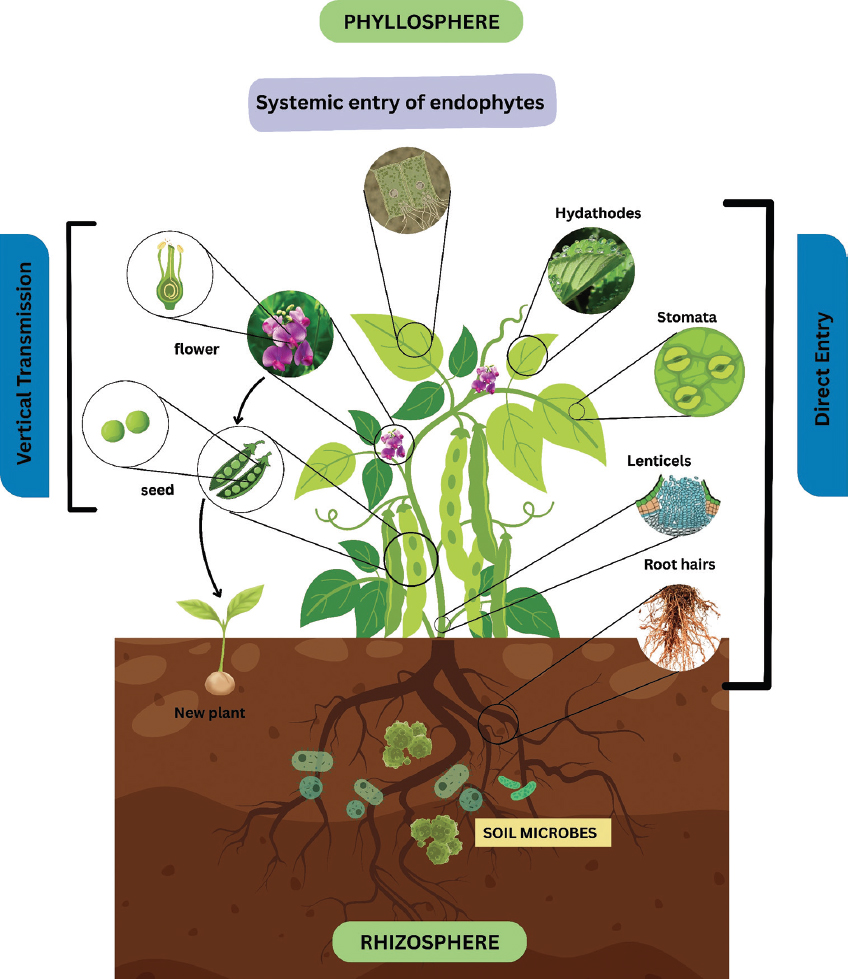 | Figure 1: Entry and establishment of endophytes within the plant. Image Created with Canva [19]. [Click here to view] |
Remarkable morphological variability has been observed in endophytes isolated from different hosts [20]. Endophytes engage with plants in a number of ways that extend from symbiotic to opportunistically pathogenic [21].
2.1. Fungal Endophytes
Endophytic fungi constitute an integral component of the plant microbiome [Table 1]. They colonize a wide range of plant parts, including roots, stems, leaves, petioles, buds, fruits, and even seeds [22]. Numerous endophytic fungi associated with monocots, such as ryegrass, rice, barley, and corn, synthesize alkaloids [23], which display broad-spectrum bioactivity, particularly targeting pathogens and nematodes [24]. Endophytic fungi play a pivotal role in enhancing growth and fortifying resistance to environmental stresses in dicotyledonous plants [25,26].
Table 1: Key fungal endophytes with their functional role and applications.
| Category | Endophytic fungal genera | Key metabolites | Functional role in agriculture | References |
|---|---|---|---|---|
| Antagonistic Endophytes | Trichoderma, | Enzymes, siderophores, antifungal compounds, VOCs | Induce resistance and suppress the pathogen, leading to broad-spectrum disease control in major crops | [34-39] |
| Cladosporium, | ||||
| Chaetomium, | ||||
| Talaromyces, | ||||
| Epicoccum, | ||||
| Pestalotiopsis | ||||
| Plant growth promoters/Biofertilizers | Serendipita, Mortierella, | Auxins, phosphatases, lipids | Root enhancement and improved nutrient uptake contributing to higher crop yields | [40-44] |
| Colletotrichum, Fusarium, | ||||
| Penicillium | ||||
| Stress-tolerance enhancers | Alternaria, | Hormones, antioxidants, P- solubilizers | Enhancement of stress tolerance and nutrient mobilization, improving crop resilience and soil health | [45-48] |
| Epichloe, Nigrospora, | ||||
| Aspergillus | ||||
| Pest-deterrent/suppression endophytes | Phyllosticta, Beauveria | Alkaloids, Beauvericin, bassianolide | Herbivore/pest suppression, resulting in improved protection of grasses, fruits, and legumes, is useful in IPM | [49,50] |
VOCs: Volatile organic compounds.
Investigations of endophytes in roughly 300,000 plant species indicate that virtually all plants harbor at least one form of endophytic microorganisms [27]. Several studies [28-30] have reported a wide diversity of endophytic fungi, encompassing genera, such as Fusarium, Trichoderma, Penicillium, Alternaria, Paecilomyces, Glomus, Colletotrichum, Rhizopus, Aspergillus, Curvularia, Serendipita, Microdochium, Claviceps, Leptospora, Phaemoniella, Epichloe, and Gyomyces [31]. Plant-associated endophytic fungi are predominantly distributed across three major phyla – Ascomycota, Basidiomycota, and Mucoromycota [32,33].
Fungal endophytes are transmitted through horizontal and vertical transmission. Vertical transmission occurs through seeds, whereas horizontal transmission occurs from soil or the environment [51]. Endophytic fungi belonging to the phylum Ascomycota are recognized for synthesizing a wide range of bioactive compounds that enhance plant growth [52] and strengthen tolerance to environmental stresses [Figure 2]. The fungal genera Fusarium and Trichoderma synthesize secondary metabolites that help plants develop resistance to pathogenic infections [53,54]. These fungi expand their hyphal networks into the soil, enhancing the plant’s absorption of key nutrients, such as phosphorus and nitrogen [55].
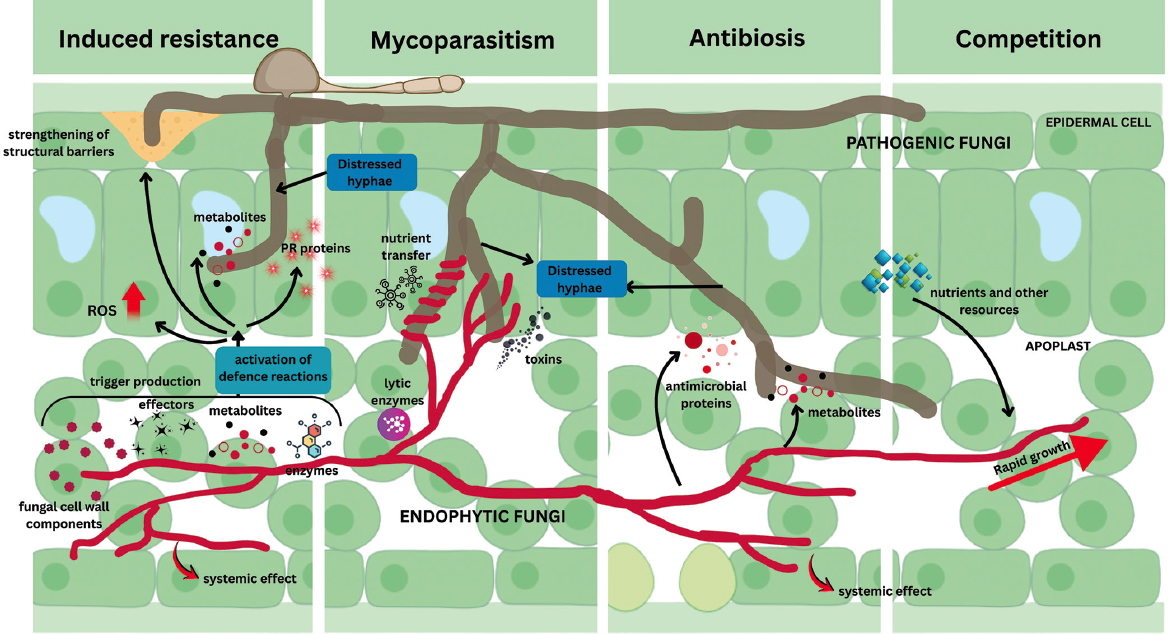 | Figure 2: Biocontrol mechanism of fungal endophytes against phytopathogens. Image Created with Canva [19]. [Click here to view] |
2.2. Bacterial Endophytes
Most dominant endophytic bacteria belong to the Proteobacteria, Firmicutes, and Actinobacteria phyla [Table 2], and dominant genera include Bacillus, Pseudomonas, and Burkholderia [56]. Endophytic bacteria are proved to improve plant growth, suppress the growth of pathogens, and enhance stress tolerance [57]. EEndophytic bacteria may improve the acquisition of N, P, K and Fe, while some diazotrophic endophytes contribute through biological nitrogen fixation [58]. These further assist plants in coping with harsh environmental conditions, notably drought, salinity, and temperature extremes [27]. Two endophytic isolates, that is, Staphylococcus warneri and Bacillus velezensis from Gnetum gnemon, successfully controlled the bacterial wilt disease [59]. The growth of Phytophthora parasitica was inhibited by over 80% due to volatiles produced by Pseudomonas taiwanensis [60].
Table 2: Key bacterial endophytes with their functional role and applications.
| S. No. | Bacterial endophytes | Functions | Agricultural importance | References |
|---|---|---|---|---|
| 1. | Pseudomonas fluorescens | Produces siderophores, IAA, antibiotics; activates ISR; suppresses soil-borne pathogens | Widely used as a bioinoculant for cereals, vegetables | [61] |
| 2. | Bacillus subtilis | Produces lipopeptides (iturin, surfactin), hydrolytic enzymes, IAA; biocontrol agent | Commercial biofertilizers; foliar sprays and seed coatings | [62] |
| 3. | Burkholderia spp. | Nitrogen fixation, phosphate solubilization, and production of antifungal compounds | Enhances the growth of rice, maize, and legumes | [63] |
| 4. | Rhizobium spp. | Symbiotic nitrogen fixation in legumes; phytohormone production | Used in legume inoculants for sustainable N supply | [64] |
| 5. | Enterobacter spp. | Produces IAA, siderophores, ACC deaminase; enhances abiotic stress tolerance | Promotes growth under salinity and drought stress | [65] |
| 6. | Azospirillum spp. | Nitrogen fixation; production of auxins and gibberellins | Biofertilizers for cereals, such as wheat and maize | [66] |
| 7. | Serratia marcescens | Produces antibiotics, proteases, and chitinases; inhibits fungal pathogens | Used in biocontrol formulations for vegetables & pulses | [65] |
| 8. | Microbacterium testaceum | Produces IAA, siderophores, and promotes nutrient uptake | Enhances plant vigor and stress tolerance in rice | [67] |
| 9, | Paenibacillus polymyxa | Produces antibiotics, exopolysaccharides, and phytohormones | Biocontrol and biofertilizer; used in cereals | [66] |
| 10. | Arthrobacter spp. | Degrades xenobiotics; produces stress tolerance enzymes | Used for phytoremediation and stress management | [68] |
| 11. | Klebsiella pneumoniae | ACC deaminase activity | Improves growth in rice and maize | [69] |
| 12. | Pantoea agglomerans | Produces antibiotics, siderophores, and auxins | Biocontrol and plant growth promotion in vegetables | [70] |
| 13. | Bacillus velezensis | Produces lipopeptides, surfactin, antimicrobial metabolites, and plant hormone modulation | Seed coating and soil inoculant for vegetables and cereals to suppress pathogens | [71] |
| 14. | Pseudomonas putida | Siderophore production, phosphate solubilization, and IAA production | Biofertilizer for growth enhancement in vegetables under nutrient-deficient conditions | [72] |
| 15. | Microbacterium oxydans | IAA production, stress tolerance enzymes, nutrient mobilization | Root/seed endophyte for cereals under water-stress environments | [73] |
| 16. | Enterobacter cloacae | IAA, siderophore, nitrogen fixation potential | Growth promoter in vegetable crops under low-fertility soils | [65] |
| 17. | Methylobacterium populi | Cytokinin production, methanol utilization, and plant growth promotion | Enhances photosynthesis and growth in field crops | [74] |
| 18. | Stenotrophomonas rhizophila | ACC deaminase, siderophores, and hydrolytic enzymes | Abiotic stress management (salinity, drought) in horticultural crops | [75] |
IAA: Indole-3-acetic acid, ISR: Induced systemic resistance.
Both rhizobial and non-rhizobial endophytes, including Klebsiella, Burkholderia, Azoarcus, Achromobacter, Serratia, Gluconoacetobacter, and Herbaspirillum, serve as effective biofertilizers, among which Azoarcus is widely recognized for its strong nitrogen-fixation activity [76]. To function as biofertilizers, endophytic bacteria are isolated, cultured, and processed into stable formulations for field use.
2.3. Endophytic Actinomycetes
Actinobacteria, which are characterized by high G+C DNA content and filamentous growth, constitute one of the largest bacterial phyla [Table 3] and are ubiquitously found in aquatic and terrestrial habitats [77]. They are widely distributed in natural ecosystem habitats, such as soil, rhizosphere soil, ectomycorrhizal plants, hypersaline soil, limestone, freshwater, marine, sponges, volcanic cave-hot spot, desert, air, insect gut, earthworm castings, and goat feces [78]. These microorganisms produce a range of plant growth-promoting substances, including phytohormones, such as indole-3-acetic acid (IAA), gibberellins (GA), and cytokinins (CK), which are essential for plant growth and development [79]. They help in the solubilization of phosphate [80] and serve as biological fertilizers [81] and can control phyto-pathogens [82]. Moreover, they also aid in bioremediation [14].
Table 3: Key actinomycete endophytes with their functional role and applications.
| Category | Endophytic actinomycete genera | Key metabolites | Agricultural importance | References |
|---|---|---|---|---|
| Biocontrol agents | Streptomyces | Antibiotics, IAA | Broad-spectrum pathogen control | [83] |
| Micromonospora | Antimicrobials | Pathogen suppression | [84] | |
| Actinoplanes | Antifungal metabolites | Root disease control | [85] | |
| Saccharopolyspora | Antibiotics | Biocontrol in multiple crops | [86] | |
| Actinokineospora | Lytic enzymes | Defense activation | [87] | |
| Kribbella spp. | Polyketides, alkaloids | Biocontrol + growth | [88] | |
| Dactylosporangium | Peptides, alkaloids | Crop protection | [89] | |
| Spirillospora | Antifungal proteins | Cereal disease control | [90] | |
| Actinomadura | Antibiotics | Solanaceous crop protection | [91] | |
| Streptosporangium | Polyketides | Soil health improvement | [92] | |
| Amycolatopsis. | Antibiotics compounds | Soil-borne pathogens control | [93] | |
| Kibdelosporangium | Macrolides | Potent biocontrol | [94] | |
| Biofertilizers and Nutrient Enhancement | Frankia | Nitrogen-fixing | Fertility in actinorhizal crops | [95] |
| Kitasatospora | Polyketides, siderophores | Root protection & nutrient uptake | [96] | |
| Planomonospora spp. | Siderophores | Root promotion | [97] | |
| Stress Tolerance and Plant Growth Promotion | Nocardiopsis | Antioxidants | Abiotic stress tolerance | [86] |
| Rhodococcus | Auxins, degradation | Stress tolerance, bioremediation | [91,98] | |
| Salinispora | Polyketides, | Salt-tolerant crop protection | [86] | |
| Actinophytocola | Siderophores, enzymes | Drought tolerance | [99] | |
| Thermomonospora spp. | Enzymes | Organic matter degradation and soil health | [100] | |
| Crossiella | Enzymes | Support legumes | [101] |
IAA: Indole-3-acetic acid.
3. ENDOPHYTE-MEDIATED PLANT PROTECTION MECHANISMS
Endophytes possess a number of strategies that they employ to suppress a broad variety of phytopathogens. They are increasingly recognized as natural allies of plants because of their capacity to exhibit multiple antagonistic strategies against harmful microbes. These strategies induce chemical, enzymatic, spatial, and nutritional defenses, which form a shield for safeguarding plants. These endophytes confer protection against pathogens through both direct and indirect strategies. Direct suppression occurs through antibiosis, competition, siderophore and phytohormone production, whereas indirect suppression is achieved by induction of plant resistance [Figure 2], secretion of secondary metabolites, and hyperparasitism [102].
Endophytes produce bacteriocins, antibiotics, bio-surfactants, lipopolysaccharides, cell wall-degrading enzymes, and volatile compounds, which obstruct the metabolism of the pathogen [103]. Moreover, the competition for space and nutrition between pathogens and endophytes plays an important role in lessening the plant’s invasion by pathogens. Chitinases and pectinases enzymes interfere with the disease-causing ability of the pathogen. Trichoderma spp. and Aspergillus spp. produce enzymes, such as chitinases, β-1,3-glucanases, cellulases, and proteases that degrade fungal cell walls, leading to rupturing of hyphae and eventually the pathogen dies [104,105]. Banana wilt-affected plantations exhibit increased activity of enzymes, transcripts of chitinase and β-1,3-glucanases have been reported from pathogen-induced cultures [106].
Endophytes are also capable of producing metabolites having antifungal and antibacterial properties [107-109]. They are known to produce bioactive compounds, such as terpenoids, alkaloids, polypeptides, and phenolic compounds [110-112]. Fungal endophytes belonging to the genera Trichoderma, Muscodor, Fusarium, and Xylaria are capable of producing volatile compounds that are helpful post-harvest crop protection [113]. Clavicipitaceous endophytes produce ergot alkaloids, which possess antimicrobial properties against post-harvest pathogens [114]. Endophytes attack pathogen invading the host, and cause twisting, perforation, and coiling of fungal hyphae and release enzymes that degrades pathogen’s cell wall, leading to inhibition and lysis of the pathogen [115].
The phytohormones, such as salicylic acid (SA), ET, and jasmonic acid (JA) act as signaling molecules [28,116] to curb the pathogen invasion [117]. These signals alert the plant regarding being attacked and activate defense pathways. These pathways upregulate defense-related genes, including those coding for pathogenesis-related (PR) proteins and oxidative enzymes, which strengthen the plant’s ability to resist future pathogen attack [111,118,119]. This primes the immune system of the plant by induced systemic resistance (ISR), resulting in durable defense responses, in case of pathogen attack in the future [120,121]. Such priming reduces the incidence of disease while conserving metabolic resources, and it has been shown to decrease dependence on chemical fungicides in cropping systems [49,105]. ET and jasmonic acid are effective against necrotrophic infections and are helpful in host-pathogen interactions [122].
Endophyte-mediated resistance is a specialized form of defense mechanism shown by the endophytes. This operates through a localized and pathway- independent mechanism that strengthens the roots of the host-plant as they are the most common entry sites for pathogens [123]. For instance, endophytic strains of Fusarium oxysporum Fo47 are known to activate resistance responses in roots. Endophytes, such as Pseudomonas and Bacillus, induce a defense system that functions independently of the JA and SA pathways yet results in robust protection against root-invading pathogens [124].
4. ENDOPHYTE- MEDIATED ABIOTIC STRESS MANAGEMENT
One of the significant abiotic stresses, responsible for global drought conditions is water scarcity, which further leads to reduced agricultural production. Plant growth-promoting bacteria are increasingly recognized for enhancing plant tolerance to drought through modifications in root architecture, phytohormone and osmolyte production, antioxidant activity, exopolysaccharide formation, siderophore production, and regulation of stress-responsive genes [125-127]. Serendipita indica, the fungal endophyte present in Chinese cabbage, is capable of showing enhanced antioxidant activity leading to improved drought tolerance [128]. Bacillus spp. helps in maintaining cellular osmotic balance by encouraging the production of osmolytes and stimulating root elongation [129]. The bacterial endophyte Bacillus pumilus, accelerates osmoprotectant accumulation and increasing nitrogen metabolism to improve the drought tolerance in Glycyrrhiza uralensis [130].
Soil salinity has an adverse impact on agriculture, as it hampers overall agricultural output through inhibiting germination of seed, uptake of nutrients, activity of beneficial microbes, caused by ionic stress and osmotic instability [131]. Endophytes are potent enough to suppress these adverse effects through improved physiological and biological mechanisms [132,133]. The bacterial endophyte Pseudomonas geniculata reduces stress caused by high salinity through the production of siderophores, mobilization of nutrients, and production of phytohormones [134]. Enhanced wheat growth has been reported under a saline environment, in the presence of salt tolerant strain Priestia aryabhattai [135]. Moreover, reduced ionic stress is observed in the presence of endophytes, which synthesize exopolysaccharides in the rhizosphere [136].
The physiology of the plant is highly disrupted by the temperature extremes, as it interferes with the structure of the proteins and also alters the enzymatic functions [137]. Heat induced stress, hampers seed germination, reduces photosynthetic efficiency, and increases membrane permeability, which ultimately leads to reduced crop production [138]. The endophytes colonizing heat-tolerant plant species, Cupressus dupreziana, Triticum aestivum, and Sporobolus indicus, help them survive under temperature extremes [139] by fixing nitrogen, solubilizing nutrients, synthesizing phytohormones, hydrogen cyanide, and siderophores [140]. Heat-tolerant endophytic fungal genera Aspergillus, Scytalidium, Myceliophthora, and Talaromyces release growth-enhancing hormones and improve uptake of nutrients, contributing to the overall growth of the plant [141]. Endophytes are capable of producing antifreeze proteins and protective metabolites to maintain the integrity of the cells under the cold induced stress [142,143].
The accumulation of toxic heavy metals in the agricultural soils is a growing concern, as it impacts the physiology and productivity of the plant [144]. Rice crop contaminated with lead (Pb) and Cadmium (Cd) has a detrimental impact on human health and global food sustainability [145]; the endophyte Deinococcus radiodurans, increases rice crop tolerance to these heavy metals by scavenging reactive oxygen species and enhancing the activity of antioxidants [145,146]. The probability of exposure among humans is elevated once these toxic metals enter the food chain [147]. Bacterial endophytes, such as Enterobacter spp., Pseudoalteromonas spp., and Salmonella spp. produce IAA to reduce metal toxicity [148-151].
5. OMICS APPROACHES TO UNRAVEL ENDOPHYTE ROLE IN AGRICULTURE
Genomics provides insights at the molecular level and has substantially increased our understanding of plant-microbiome associations [152,153]. These insights help us formulate biotechnological methodologies to encourage better crop performance [154]. The genes essential for survival of the endophytes within the plant, production of bioactive compounds, and secretion of beneficial metabolites that support plant growth can be identified using these approaches [155-157]. Next-generation sequencing is one such approach that has unraveled the genes essential for various metabolic processes and colonization of the endophytes [158,159]. The molecular level studies enabled us to differentiate beneficial microbes from the harmful ones through evolutionary adaptations and regulatory pathways [160]. Novel strains are discovered through 16 S rRNA of endophytes [161].
Metabolomic profiling of endophytes, revealed bioactive compounds essential for enhancing the vitality of the plants [162-164]. It helps in decoding biochemical networks that govern plant response under abiotic stresses?[165] by the quantification of metabolites involved in stress adaptation [166]. In addition, integration of metabolomic, proteomic, and genomic analyses offer a comprehensive view of mechanisms involved in stress tolerance, facilitating targeted strategies to strengthen the performance of the crops under global challenges [167].
6. CHALLENGES AND FUTURE DIRECTIONS
The potential of endophytes to inhabit different sites within the plant has paved the way for their use in multiple biological applications. However, there are an immense number of endophytes that are still unidentified and uncultured because of insufficient knowledge about their cultivation requirements [168]. One of the major limitations of endophytes is host-specificity, and the effectiveness of endophytes often depends on the crop genotype and environmental conditions [169]. Another issue related to endophytic probiotics is their commercialization, as they encounter regulatory and production barriers. In addition, field consistency is one of the limitations; strains that perform well under laboratory trials sometimes fail to reproduce the same results under open-field conditions, which makes the farmers doubtful about the field performance of endophytes [49]. Lack of standardized inoculation methods complicates their integration into large-scale farming systems [112].
Future strategies required to overcome the challenges include:
Integration of multi-omics techniques for better understanding of the plant-endophytic interactions
Development of cultivars, highly compatible with beneficial endophytes for better performance across environments
Conduction of large-scale field trials to enhance reliability, stability, and commercialization of the endophytic products
Collaboration among policymakers, researchers, and industry stakeholders to accelerate endophyte-based innovations.
7. CONCLUSION
Presently, agriculture is facing numerous challenges, including climate change, biotic and abiotic stresses, soil degradation and pollution, all of which significantly affect crop yield and threaten food security. Therefore, it is essential to develop strategies that can enhance disease resistance and boost crop productivity over the long run. Thus, exploiting the beneficial plant microbiomes and their products is essential for developing effective strategies. By understanding the complexities of plant microbiome interactions and harnessing their benefits, researchers can develop innovative strategies for disease management. Plants have the ability to modulate their beneficial microbiomes under various stress conditions to enhance their own protection. Their benefits extend even after harvest, where they delay spoilage and extend shelf life through antifungal activity, offering a natural solution to food loss. However, translating laboratory discoveries into consistent field applications remains challenging due to host specificity, environmental variability, and lack of standardized protocols. Interdisciplinary research and collaborations are essential to fully harness its potential for promoting sustainable agricultural practices. Future studies should investigate how the plant immune system interacts with different beneficial microbiomes and how these interactions shape the specific microbiota that enhance crop health and productivity.
8. AUTHORS’ CONTRIBUTIONS
All authors made substantial contributions to conception and design, acquisition of data, or analysis and interpretation of data; took part in drafting the article or revising it critically for important intellectual content; agreed to submit to the current journal; gave final approval of the version to be published; and agreed to be accountable for all aspects of the work. All the authors are eligible to be an author as per the International Committee of Medical Journal Editors (ICMJE) requirements/guidelines.
9. FUNDING
There is no funding to report.
10. CONFLICTS OF INTEREST
The authors report no financial or any other conflicts of interest in this work.
11. ETHICAL APPROVALS
This study does not involve experiments on animals or human subjects.
12. DATA AVAILABILITY
Data is available with the authors and shall be provided upon request.
13. PUBLISHER’S NOTE
All claims expressed in this article are solely those of the authors and do not necessarily represent those of the publisher, the editors and the reviewers. This journal remains neutral with regard to jurisdictional claims in published institutional affiliation.
14. USE OF ARTIFICIAL INTELLIGENCE (AI)-ASSISTED TECHNOLOGY
The authors declare that they have not used artificial intelligence (AI)-tools for writing and editing of the manuscript, and no images were manipulated using AI.
REFERENCES
1. Tariq A, Tanvir A, Barasarathi J, Ahmad I, Singh R. Endophytes: Key role players for sustainable agriculture: Mechanisms, omics insights and future prospects. Plant Growth Regul. 2025;105:1969-90. [CrossRef]
2. Kuzniar A, Kruczynska A, W?odarczyk K, Vangronsveld J, Woli?ska A. Endophytes as permanent or temporal inhabitants of different ecological niches in sustainable agriculture. Appl Sci. 2025;15(3):1253. [CrossRef]
3. Agrawal S, Bhatt A. Microbial endophytes: Emerging trends and biotechnological applications. Curr Microbiol. 2023;80:249. [CrossRef]
4. Sena L, Mica E, Valè G, Vaccino P, Pecchioni N. Exploring the potential of endophyte-plant interactions for improving crop sustainable yields in a changing climate. Front Plant Sci. 2024;15:1349401. [CrossRef]
5. Gakuubi Muthee M, Munusamy M, Liang ZX, Ng SB. Fungal endophytes: A promising frontier for discovery of novel bioactive compounds. J Fungi (Basel). 2021;7:786. [CrossRef]
6. Lata R, Chowdhury S, Gond SK, White JF Jr. Induction of abiotic stress tolerance in plants by endophytic microbes. Front Microbiol. 2018;9:2123. [CrossRef]
7. Santoyo G, Guzmán-Guzmán P, Parra-Corta F, Santos-Villalobos SD, Orozco-Mosqueda MC, Glick BR. Plant growth stimulation by microbial consortia. Agronomy. 2021;11:219. [CrossRef]
8. Ansabayeva A, Makhambetov M, Rebouh N, Abdelkader M, Saudy HS, Hassan KM, et al. Plant growth-promoting microbes for resilient farming systems: Mitigating environmental stressors and boosting crop productivity. Horticulturae. 2025;11(3):260. [CrossRef]
9. Sarkar T, Ram S, Verma P. The ecological footprints of pesticides in agriculture: Environmental and health impacts. J Appl Biol Agric Sci. 2025;3(1):152-71. [CrossRef]
10. Wilson T, Thomas C. Sustainable agriculture practices with endophytic microbes. J Sustain Farming. 2023;48:56-69.
11. Sharma I, Dhar MK, Raina A, Choudhary M, Apra, Kaul S. Fungal endophyte bioinoculants as a green alternative towards sustainable agriculture. Heliyon. 2023;9(9):e19487. [CrossRef]
12. Bernard J, Wall CB, Costantini MS, Rollins RL, Atkins ML, Cabrera FP, et al. Plant part and a steep environmental gradient predict plant microbial composition in a tropical watershed. ISME J. 2021;15(4):999-1009. [CrossRef]
13. Kumari N, Chaudhary S, Dhiman S, Shukla PK, Gundappa. Biological management of horticultural crop diseases using phyllosphere-, rhizosphere-, and endosphere-derived biocontrol agents. In: Innovative Approaches in Diagnosis and Management of Crop Diseases. Boca Raton: CRC Press; 2021. [CrossRef]
14. Tiwari P, Kang S, Bae H. Plant-endophyte associations: Rich yet under-explored sources of novel bioactive molecules and applications. Microbiol Res. 2023;266:127241. [CrossRef]
15. Watts D, Palombo EA, Jaimes Castillo A, Zaferanloo B. Endophytes in agriculture: Potential to improve yields and tolerances of agricultural crops. Microorganisms. 2023;11(5):1276. [CrossRef]
16. Santoyo G. How plants recruit their microbiome? New insights into beneficial interactions. J Adv Res. 2022;40:45-58. [CrossRef]
17. Dubey A, Malla MA, Kumar A, Dayanandan S, Khan ML. Plant endophytes: Unveiling hidden Agenda for bioprospecting toward sustainable agriculture. Crit Rev Biotechnol. 2020;40:1210-31. [CrossRef]
18. Kumar A, Droby S, Singh VK, Singh SK, White JF. Entry, colonization and distribution of endophytic microorganisms in plants. In: Microbial Endophytes. Amsterdam: Elsevier; 2020. 1-33. [CrossRef]
19. Canva Pty Ltd. Canva. Sydney (NSW): Canva; 2024. Available from: https://www.canva.com [Last accessed on 2026 Jan 07].
20. Gao Y, Xu Y, Dong Z, Guo Y, Luo J, Wang F, et al. Endophytic fungal diversity and its interaction mechanism with medicinal plants. Molecules. 2025;30(5):1028. [CrossRef]
21. Priyanka C, Pratibha V, Aradhana M. Bio avengers: How endophytic microorganisms alter a plant's defense mechanisms? J Plant Sci Phytopathol. 2024;8(1):1-6. [CrossRef]
22. Bhunjun CS, Phukhamsakda C, Hyde KD, McKenzie EH, Saxena RK, Li QR. Do all fungi have ancestors with endophytic lifestyles? Fungal Divers. 2024;125(1):73-98. [CrossRef]
23. Eady C. The impact of alkaloid-producing epichloë endophyte on forage ryegrass breeding: A New Zealand perspective. Toxins (Basel). 2021;13(2):158. [CrossRef]
24. Card SD, Bastias DA, Caradus JR. Antagonism to plant pathogens by Epichloë fungal endophytes-a review. Plants (Basel). 2021;10(10):1997. [CrossRef]
25. Wei YF, Chen SY, Zhou XY, Ding DC, Song JJ, Yang SD. Endophytic microorganisms in tomato roots, changes in the structure and function of the community at different growing stages. Microorganisms. 2024;12(6):1251. [CrossRef]
26. Ghaffari S, Karimi J, Cheniany M, Seifi A, Loverodge J, Butt TM. Endophytic entomopathogenic fungi enhance plant immune responses against tomato leafminer. J Invertebr Pathol. 2025;209:108270. [CrossRef]
27. Najjar AA. Therapeutic potential of endophytic microbes: Emphasizing both fungal and bacterial endophytes. Appl Microbiol. 2025;5(1):5. [CrossRef]
28. Baron NC, Rigobelo EC. Endophytic fungi: A tool for plant growth promotion and sustainable agriculture. Mycology. 2022;13:39-55. [CrossRef]
29. Liu X, Zhou ZY, Cui JL, Wang ML, Wang JH. Biotransformation ability of endophytic fungi: From species evolution to industrial applications. Appl Microbiol Biotechnol. 2021;105:7095-113. [CrossRef]
30. Yan L, Zhu J, Zhao X, Shi J, Jiang C, Shao D. Beneficial effects of endophytic fungi colonization on plants. Appl Microbiol Biotechnol. 2019;103:3327-40. [CrossRef]
31. Chandra H, Yadav A, Prasad R, Kalra SJ, Singh A, Bhardwaj N, et al. Fungal endophytes from medicinal plants acting as natural therapeutic reservoir. Microbe. 2024;3:73-80. [CrossRef]
32. Hassani MA, Durán P, Hacquard S. Microbial interactions within the plant holobiont. Microbiome. 2018;6:58. [CrossRef]
33. Agbessenou A, Akutse KS, Yusuf AA, Ekesi S, Subramanian S, Khamis FM. Endophytic fungi protect tomato and nightshade plants against Lepidoptera: Gelechiidae. Sci Rep. 2020;10:22195. [CrossRef]
34. Bastakoti S, Belbase S, Manandhar S, Arjyal C. Trichoderma species as biocontrol agent against soil-borne fungal pathogens. Nepal J Biotechnol. 2017;5(1):39. [CrossRef]
35. Li Y, Wang Y, Wang H, Shi T, Wang B. The genus Cladosporium: A prospective producer of natural products. Int J Mol Sci. 2024;25(3):1652. [CrossRef]
36. Sharma S, Pandey S, Kulshreshtha S, Dubey M. Biology and application of Chaetomium globosum as a biocontrol agent: Current status and future prospects. Microorganisms. 2025;13(7):1646. [CrossRef]
37. Nicoletti R, Andolfi A, Salvatore MM. Endophytic fungi of the genus Talaromyces and plant health. In: Microbial Endophytes and Plant Growth. United States: Acadmic Press; 2023. 183-213. [CrossRef]
38. Fu SQ, Cao F, Pang S, Qi XQ, Xu ZH, Zhang YH, et al. The biocontrol effect and mechanism of the marine-derived fungus Epicoccum nigrum against Alternaria alternata, the causal agent of tomato black spot disease. Pestic Biochem Physiol. 2025;213:106552. [CrossRef]
39. Wu C, Wang Y, Yang Y. Pestalotiopsis diversity: Species, dispositions, secondary metabolites, and bioactivities. Molecules. 2022;27(22):8088. [CrossRef]
40. Aslam MM, Karanja J, Bello SK. Serendipita indica colonization reprograms plants to improved P-uptake, enhanced crop performance, and biotic/abiotic stress tolerance. Physiol Mol Plant Pathol. 2019;106:232-7. [CrossRef]
41. Li F, Zhang S, Wang Y, Li Y, Li P, Chen L, et al. Rare fungus, Mortierella capitata, promotes crop growth by stimulating primary metabolisms related genes and reshaping rhizosphere bacterial community. Soil Biol Biochem. 2020;151:108017. [CrossRef]
42. Silva MV, Alexandre AS, Nunez CV. Endophytic species of the genus Colletotrichum as a source of bioactive metabolites: A review of their biotechnological potential. Microorganisms. 2025;13(8):1826. [CrossRef]
43. Taheri P, Alizadeh H, Mohammadi A, Ahmadzadeh M. Functional roles of NC-endophytes in crop stress management. Front Plant Sci. 2024;15:117220.
44. Sun W, Shahrajabian MH, Guan L. The biocontrol and growth-promoting potential of Penicillium spp. and Trichoderma spp. In sustainable agriculture. Plants (Basel). 2025;14(13):2007. [CrossRef]
45. Bi Y, Zhao J, Tan H, Zhang S. Dark septate endophytic fungus Alternaria sp. 17463 regulates antioxidant enzymes and metabolism in response to acid-base stress. Arch Microbiol. 2025;207:288. [CrossRef]
46. Tian P, Wang G, Ma B, Wang M. Effects of Epichloë festucae var. lolii on heavy metal stress tolerance of its perennial ryegrass host. Grassl Res. 2025;4(4):332-40. [CrossRef]
47. Ahmed IS, Zakaria HM. Antifungal activity of endophytic Nigrospora species isolated from Pluchea plants against some fungal phytopathogens. Int J Environ Agric Biotechnol. 2025;10(5):62. [CrossRef]
48. Ismail, Hamayun M, Hussain A, Afzal Khan S, Iqbal A, Lee IJ. Aspergillus flavus promoted the growth of soybean and sunflower seedlings at elevated temperature. Biomed Res Int. 2019;2019:1295457. [CrossRef]
49. Grabka R, D'Entremont TW, Adams SJ, Walker AK, Tanney JB, Abbasi PA, et al. Fungal endophytes and their role in agricultural plant protection against pests and pathogens. Plants (Basel). 2022;11(3):384. [CrossRef]
50. Bahadur A. The potential of the entomopathogenic fungus Beauveria bassiana to manage insect pests and diseases. Nat Resour Conserv Res. 2023;6(2):2543. [CrossRef]
51. Frank AC, Saldierna Guzmán JP, Shay JE. Transmission of bacterial endophytes. Microorganisms. 2017;5(4):70. [CrossRef]
52. Afrouz M, Sayyed RZ, Fazeli-Nasab B, Piri R, Almalki WH, Fitriatin BN. Seed bio-priming with Trichoderma harzianum alleviates cold stress in maize. PeerJ. 2023;11:e15644. [CrossRef]
53. Vijayakumar P, Appusami S, Anbazhagan SA, Rajendran R, Shanmugam K, Perveen K, et al. Harnessing Trichoderma asperellum: tri-trophic interactions for enhanced black gram growth and root rot resilience. J Basic Microbiol. 2025;65(3):e2400569. [CrossRef]
54. Sharma S, Kumari P, Shandilya M, Thakur S, Perveen K, Sheikh I, et al. Combination of a-Fe?O?NP and Trichoderma sp. Improves antifungal activity against Fusarium wilt. J Basic Microbiol. 2025;65(3):e2400613. [CrossRef]
55. Begum N, Qin C, Ahanger MA, Raza S, Khan MI, Ashraf M, et al. Role of arbuscular mycorrhizal fungi in plant growth regulation: Implications in abiotic stress tolerance. Front Plant Sci. 2019;10:1068. [CrossRef]
56. Goodwin PH. The endosphere microbiome of ginseng. Plants (Basel). 2022;11(3):415. [CrossRef]
57. Adeleke BS, Babalola OO. The endosphere microbial communities, a great promise in agriculture. Int Microbiol. 2020;24(1):1-17. [CrossRef]
58. Vardharajula S, SkZ A, Vurukonda SSKP, Shrivastava M. Plant growth promoting endophytes and their interaction with plants to alleviate abiotic stress. Curr Biotechnol. 2017;6:252-63. [CrossRef]
59. Agarwal H, Dowarah B, Baruah PM, Bordoloi KS, Krishnatreya DB, Agarwala N. Endophytes from Gnetum gnemon L. Can protect seedlings against the infection of phytopathogenic bacterium Ralstonia solanacearum as well as promote plant growth in tomato. Microbiol Res. 2020;238:126503. [CrossRef]
60. Iqrar I, Shinwari ZK, El-Sayed AF, Ali GS. Exploration of microbiome of medicinally important plants as biocontrol agents against Phytophthora parasitica. Arch Microbiol. 2021;203:2475-89. [CrossRef]
61. Mehmood N, Saeed M, Zafarullah S, Hyder S, Rizvi ZF, Gondal AS, et al. Multifaceted impacts of plant-beneficial Pseudomonas spp. in managing various plant diseases and crop yield improvement. ACS Omega. 2023;8(25):22296-315. [CrossRef]
62. Murthy S, Murugan R, Ramesh M, Sakthivel S, Krish KR. Formulation and characterization of encapsulated Bacillus spp. For enhanced agro-industrial efficacy. Int J Innov Sci Res Technol. 2025;10(9):4. [CrossRef]
63. Santos IB, Pereira AP, De Souza AJ, Cardoso EJ, Da Silva FG, Oliveira JT, et al. Selection and characterization of Burkholderia spp. for their plant-growth promoting effects and influence on maize seed germination. Front Soil Sci. 2021;1:805094. [CrossRef]
64. Bahuguna V, Matura R, Farswan AS, Naqvi SS, Sharma N, Chaudhary M. Rhizobium as a potential biofertilizer and its quality control analysis for sustainable agriculture. J Appl Biol Biotech. 2025;13(3):97-105. [CrossRef]
65. Bhardwaj I, Kumar V, Singh S, Sharma AJ, Kumari S, Bhardwaj N, et al. Evaluation of stress-tolerant Serratia and Enterobacter as PGPR for nutrient solubilization and dose-dependent bioformulation to enhance tomato seedlings. Plants (Basel). 2025;14(14):2154. [CrossRef]
66. Shahwar D, Mushtaq Z, Mushtaq H, Alqarawi AA, Park Y, Alshahrani TS, et al. Role of microbial inoculants as bio fertilizers for improving crop productivity: A review. Heliyon. 2023;9(6):e16134. [CrossRef]
67. Patel A, Sahu KP, Mehta S, Javed M, Balamurugan A, Ashajyothi M, et al. New insights on endophytic Microbacterium-assisted blast disease suppression and growth promotion in rice: Revelation by polyphasic functional characterization and transcriptomics. Microorganisms. 2023;11(2):362. [CrossRef]
68. Xu X, Xu M, Zhao Q, Xia Y, Chen C, Shen Z. Complete genome sequence of Cd II)-resistant Arthrobacter sp. PGP41, a plant growth-promoting bacterium with potential in microbe-assisted phytoremediation. Curr Microbiol. 2018;75:1231-39. [CrossRef]
69. Shahid M, Singh UB, Khan MS, Singh P, Kumar R, Singh RN, et al. Bacterial ACC deaminase: Insights into enzymology, biochemistry, genetics, and potential role in amelioration of environmental stress in crop plants. Front Microbiol 2023;14:1132770. [CrossRef]
70. Luziatelli F, Ficca AG, Cardarelli M, Melini F, Cavalieri A, Ruzzi M. Genome sequencing of Pantoea agglomerans C1 provides insights into molecular and genetic mechanisms of plant growth-promotion and tolerance to heavy metals. Microorganisms. 2020;8:153. [CrossRef]
71. Wang B, Tan S, Wu M, Feng Y, Yan W, Yun Q, et al. Effects of two Bacillus velezensis strains isolated from different sources on the growth of Capsicum annum. Front Microbiol. 2024;15:1504660. [CrossRef]
72. He Y, Pantigoso HA, Wu Z, Vivanco JM. Co-inoculation of Bacillus sp. and Pseudomonas putida at different development stages acts as a biostimulant to promote growth, yield and nutrient uptake of tomato. J Appl Microbiol. 2019;127(1):196-207. [CrossRef]
73. Corretto E, Antonielli L, Sessitsch A, Höfer C, Puschenreiter M, Widhalm S, et al. Comparative genomics of Microbacterium species to reveal diversity, potential for secondary metabolites and heavy metal resistance. FrontMicrobiol. 2020;11:1869. [CrossRef]
74. Arya C, Gopal SK, Jose D, James D, Saeed T. Drought-tolerant Methylobacterium populi (Nel-c) enhanced growth and disease resistance in amaranth. Indian J Hortic. 2025;82(1):34-9. [CrossRef]
75. Zhang X, Liao H, Cai P, Cai T, Si H, Yuan J, et al. Isolation and characterization of Stenotrophomonas rhizophila T3E: A multifunctional rhizobacterium enhancing tomato growth and soil health. Front Plant Sci. 2025;16:1692957. [CrossRef]
76. Fahde S, Boughribil S, Sijilmassi B, Amri A. Rhizobia: A promising g source of plant growth-promoting molecules. Agriculture. 2023;13:1279. [CrossRef]
77. Barka EA, Vatsa P, Sanchez L, Gavriel M, Jacquard C, Karray F, et al. Taxonomy, physiology, and natural products of actinobacteria. Microbiol Mol Biol Rev. 2016;80(1):1-43. [CrossRef]
78. Selim MS, Abdelhamid SA, Mohamed SS. Secondary metabolites and biodiversity of actinomycetes. J Genet Eng Biotechnol. 2021;19:72. [CrossRef]
79. Swarnalakshmi K, Senthilkumar M, Ramakrishnan B. Endophytic actinobacteria: Nitrogen fixation, phytohormone production and antibiosis. In: Plant Growth Promoting Actinobacteria. Berlin: Springer; 2016. 123-45. [CrossRef]
80. Santoyo G, Moreno-Hagelsieb G, Orozco-Mosqueda MC, Glick BR. Plant growth-promoting bacterial endophytes. Microbiol Res. 2016;183:92-9. [CrossRef]
81. Kaari M, Manikkam R, Annamalai KK, Joseph J. Actinobacteria as biofertilizer/biocontrol agents for bio-organic agriculture. J Appl Microbiol. 2023;134:lxac047. [CrossRef]
82. Malik S, Kishore S, Dutta AK, Dhasmana A. Sustainable agriculture approach through endophytes. In: Endophytic Association: What, Why and How. Netherlands: Elsevier; 2022. 303-18. [CrossRef]
83. Buzón-Durán L, Molinuevo-Salces B, García-González MC, Sánchez-Báscones M, Vitoria C, Horta C. Effect of Streptomyces spp. Metabolites and the combination of biochar and compost on Fusarium graminearum inhibition, triticale growth, and soil properties. Sci Total Environ. 2025;981:179595. https://doi.org/10.1016/j.scitotenv.2025.179595 [CrossRef]
84. Soko?owski W, Wdowiak-Wróbel S, Marek-Kozaczuk M, Kalita M. In vitro screening of endophytic micromonospora strains associated with white clover for antimicrobial activity against phytopathogenic fungi and promotion of plant growth. Agronomy. 2024;14(5):1062. https://doi.org/10.3390/agronomy14051062 [CrossRef]
85. Chakraborty AP, Ray P, Chakraborty U, Chakraborty B. Non-Streptomyces actinomycetes (NSA) as bioprotectors. J Mycopathol Res. 2023;61(2):157-70. https://doi.org/10.57023/JMycR.61.2.2023.157 [CrossRef]
86. Golinska P, Wypij M, Agarkar G, Rathod D, Dahm H, Rai M. Endophytic actinobacteria of medicinal plants: Diversity and bioactivity. Antonie Van Leeuwenhoek. 2015;108(2):267-89. https://doi.org/10.1007/s10482-015-0502-7 [CrossRef]
87. Yushchuk O. Secondary metabolites from Actinokineospora spp.: Insights into a sparsely studied genus of actinomycetes. Fermentation. 2025;11(12):0663. https://doi.org/10.3390/fermentation11120663 [CrossRef]
88. Sánchez-Hidalgo M, García MJ, González I, Oves-Costales D, Genilloud O. Complete genome sequence analysis of Kribbella sp. CA-293567 and identification of the Kribbellichelins A & B and Sandramycin biosynthetic gene clusters. Microorganisms. 2023;11(2):265. https://doi.org/10.3390/microorganisms11020265 [CrossRef]
89. Moureu S, Caradec T, Trivelli X, Drobecq H, Beury D, Bouquet P, et al. Rubrolone production by Dactylosporangium vinaceum: Biosynthesis, modulation and possible biological function. Appl Microbiol Biotechnol. 2021;105:5541-51. https://doi.org/10.1007/s00253-021-11404-w [CrossRef]
90. Song J, Wang J, Sun T, Li C, He H, Shi L, et al. Spirillospora tritici sp. Nov., a novel actinomycete isolated from rhizosphere soil of Triticum aestivum L. Curr Microbiol. 2018;75(11):1477-83. https://doi.org/10.1007/s00284-018-1548-3 [CrossRef]
91. Aamir M, Singh SK, Zeyad MT, Upadhyay R. Actinomycetes as biostimulants and their application in agricultural practices. Microbiome stimulants for crops. 2021;267-82. https://doi.org/10.1016/B978-0-12-822122-8.00021-2 [CrossRef]
92. Boukaya N, Goudjal Y, Zamoum M, Chaabane Chaouch F, Sabaou N, Mathieu F, et al. Biocontrol and plant-growth-promoting capacities of actinobacterial strains from the Algerian Sahara and characterisation of Streptosporangium becharense SG1 as a promising biocontrol agent. Biocontrol Sci Technol. 2018;28(9):858-73. https://doi.org/10.1080/09583157.2018.1501466 [CrossRef]
93. Gopalakrishnan S, Vadlamudi S, Kumar N, Gottumukkala A, Sharma R. Exploiting plant growth-promoting Amycolatopsis sp. for biocontrol of charcoal rot of sorghum (Sorghum bicolor L.) caused by Macrophomina phaseolina (Tassi) Goid. Arch Phytopathol Plant Prot. 2019;52:543-59. https://doi.org/10.1080/03235408.2018.1553472 [CrossRef]
94. Qin S, Feng WW, Xing K, Bai JL, Yuan B, Liu WJ, et al. Complete genome sequence of Kibdelosporangium phytohabitans KLBMP 1111T, a plant growth-promoting endophytic actinomycete isolated from oil-seed plant Jatropha curcas L. J Biotechnol. 2015;216:129-30. https://doi.org/10.1016/j.jbiotec.2015.10.017 [CrossRef]
95. Marappa N, Dharumadurai D, Nooruddin T, Abdulkader AM. Morphological and molecular characterization and biofilm inhibition effect of endophytic Frankia sp. from root nodules of actinorhizal plant Casuarina sp. S Afr J Bot. 2020;134:72-83. https://doi.org/10.1016/j.sajb.2020.02.039 [CrossRef]
96. Cunha-Ferreira I, Vizzotto C, De Freitas MA, Peixoto J, Carvalho L, Totola M, et al. Genomic and physiological characterization of Kitasatospora sp. nov., an actinobacterium with potential for biotechnological application isolated from Cerrado soil. Braz J Microbiol. 2024;55:1099-15. https://doi.org/10.1007/s42770-024-01324-y [CrossRef]
97. Zdouc MM, Iorio M, Maffioli SI, Crüsemann M, Donadio S, Sosio M. Planomonospora: A metabolomics perspective on an underexplored actinobacteria genus. J Nat Prod. 2021;84(2):204-19. [CrossRef]
98. Vergani L, Mapelli F, Suman J, Cajthaml T, Uhlik O, Borin S. Novel PCB-degrading Rhodococcus strains able to promote plant growth for assisted rhizoremediation of historically polluted soils. PLoS ONE. 2019;14(8):e0221253. [CrossRef]
99. Ge X, Yang S, Zhen C, Liu W. Actinophytocola gossypii sp. nov. And Streptomyces gossypii sp. nov., two novel actinomycetes isolated from rhizosphere soil of cotton. Int J Syst Evol Microbiol. 2023;73(4). [CrossRef]
100. Islam MM, Mandal S. Unveiling growth-promoting attributes of peanut root endophyte Micromonospora sp. Arch Microbiol. 2024; 206(4):182. [CrossRef]
101. Martin-Pozas T, Gonzalez-Pimentel JL, Jurado V, Laiz L, Cañaveras JC, Fernandez-Cortes A, et al. Crossiella, a rare Actinomycetota genus, abundant in the environment. Appl Biosci. 2023;2(2):194-210. [CrossRef]
102. Kohl J, Kolnaar R, Ravensberg WJ. Mode of action of microbial biological control agents against plant diseases. Front Plant Sci. 2019;10:454982. [CrossRef]
103. Raymaekers K, Ponet L, Holtappels D, Berckmans B, Cammue BP. Screening for novel biocontrol agents applicable in plant disease management: A review. Biol Control. 2020;144:104240. [CrossRef]
104. Kumari R, Koul B, Kumar V, Kumar A, Somal MK, Sachan RSK. Protease and chitinase activity of Trichoderma isolates and their synergy with biochar in enhancing chickpea defense related enzymes. Front Microbiol. 2025:16:1699251. [CrossRef]
105. El-Debaiky SA. Antagonistic studies and hyphal interactions of the new antagonist Aspergillus piperis against some phytopathogenic fungi in vitro in comparison with Trichoderma harzianum. Microb Pathog. 2017;113:135-43. [CrossRef]
106. Win TT, Bo B, Malec P, Khan S, Pengcheng F. Newly isolated strain of Trichoderma asperellum from disease-suppressive soil suppresses Fusarium pathogens. J Plant Pathol. 2021;103(3):549-61. [CrossRef]
107. Palanichamy P, Krishnamoorthy G, Kannan S, Marudhamuthu M. Bioactive potential of secondary metabolites derived from medicinal plant endophytes. Egypt J Basic Appl Sci. 2018;5:303-12. [CrossRef]
108. Rana KL, Kour D, Yadav AN, Kalia A, Singh J. Antagonistic activity of fungal and bacterial endophytes: An eco-friendly approach to protect agricultural crops. Microbiol Res. 2020;238:126525.
109. Alijani Z, Amini J, Ashengroph M. Biocontrol mechanisms of endophytic fungi. Postharvest Biol Technol. 2021;177:111523.
110. Balla A, Silini A, Cherif-Silini H, Bouket AC, Moser WK, Nowakowska JA, et al. Threat of pests and pathogens and potential for biological control in forest ecosystems. Forests. 2021;12(11):1579. [CrossRef]
111. Rabbee MF, Ali MS, Islam MN, Rahman MM, Hasan MM, Baek KH. Endophyte mediated biocontrol mechanisms of phytopathogens in agriculture. Res Microbiol. 2024;175(8):104229. [CrossRef]
112. Chaudhary P, Agri U, Chaudhary A, Kumar A, Kumar G. Endophytes and their potential in biotic stress management and crop production. Front Microbiol. 2022;13:933017. [CrossRef]
113. Macias-Rubalcava ML, Garrido-Santos MY. Phytotoxic compounds from endophytic fungi. Appl Microbiol Biotechnol. 2022;106(3-4):931-50. [CrossRef]
114. Florea S, Panaccione DG, Schardl CL. Ergot alkaloids of the Clavicipitaceae. Phytopathology. 2017;107(5):504-18. https://doi.org/10.1094/PHYTO-12-16-0435-RVW [CrossRef]
115. Waghunde RR, Shelake RM, Shinde MS, Hayashi H. Endophyte microbes: A weapon for plant health management. In: Microorganisms for Green Revolution. Microorganisms for Sustainability. Vol. 6. Singapore: Springer; 2017. 245-58. [CrossRef]
116. Shi X, Qin T, Liu H, Wu M, Li J, Shi Y, et al. Endophytic fungi activate similar defense strategies of Achnatherum sibiricum to different pathogens. Front Microbiol. 2020;11:1607. [CrossRef]
117. Lahlali R, Ezrari S, Radouane N, Kenfaoui J, Esmaeel Q, El Hamss H, et al. Biological control of plant pathogens: A global perspective. Microorganisms. 2022;10(3):596. [CrossRef]
118. Martínez-Medina A, Fernandez I, Lok GB, Pozo MJ, Pieterse CM, Van Wees SC. Trichoderma-mediated shift from SA- to JA-defence protects tomato against Meloidogyne incognita. New Phytol. 2017;213(3):1363-77. [CrossRef]
119. Mauch-Mani B, Baccelli I, Luna Diez E, Flors V. Defense priming: An adaptive part of induced resistance. Annu Rev Plant Biol. 2017;68:485-512. [CrossRef]
120. Fadiji AE, Kanu JO, Babalola OO. Metagenomic profiling of rhizosphere microbial community structure and diversity associated with maize plant as affected by cropping systems. Int Microbiol. 2021;24:325-35. [CrossRef]
121. Trivedi P, Leach JE, Tringe SG, Sa T, Singh BK. Plant-microbiome interactions: From community assembly to plant health. Nat Rev Microbiol. 2020;18(11):607-21. [CrossRef]
122. Ghozlan MH, El-Argawy E, Tokgöz S, Lakshman DK, Mitra A, Ghozlan MH. Plant defense against necrotrophic pathogens. Am J Plant Sci. 2020;11(12):2122-38. [CrossRef]
123. Veloso J, Alabouvette C, Olivain C, Flors V, Pastor V, Garcia T, et al. Modes of action of the protective strain Fo47 in controlling verticillium wilt of pepper. Plant Pathol. 2016;65:997-1007. [CrossRef]
124. Constantin ME, De Lamo FJ, Vlieger BV, Rep M, Takken FL. Endophyte-mediated resistance in tomato to Fusarium oxysporum independent of ET, JA and SA. Front Plant Sci. 2019;10:979. [CrossRef]
125. Vafa Z, Shabani L, Khoshkholgh-Sima N, Saadatmand K, Khashe-Sioz S. Plant growth-promoting bacteria enhance drought tolerance: Mechanisms review. Rhizosphere. 2021;19:100393.
126. Vafa Z, Shabani L, Khoshkholgh-Sima N, Saadatmand K, Khashe-Sioz S. Microbial strategies for drought resilience in plants. Environ Exp Bot. 2024;214:105500.
127. Nadeem SM, Ahmad M, Zahir ZA, Javaid A, Ashraf M. The role of mycorrhizae and plant growth promoting rhizobacteria (PGPR) in improving crop productivity under stressful environments. Biotechnol Adv. 2014;32(2):429-48. [CrossRef]
128. Sun C, Johnson JM, Cai D, Sherameti I, Oelmüller R, Lou B. Piriformospora indica confers drought tolerance in Chinese cabbage leaves by stimulating antioxidant enzymes, the expression of drought-related genes and the plastid-localized CAS protein. J Plant Physiol. 2010;167(12):1009-17. [CrossRef]
129. Lahlali R, Ezrari S, Radouane N, Belabess Z, Jiang Y, Mokrini F, et al. Bacillus spp. Mediated drought stress tolerance in plants: Current and future prospects. In: Bacilli in Climate Resilient Agriculture and Bioprospecting. Cham: Springer; 2022. [CrossRef]
130. Cui G, Ma X, Lang D, Zhou L, Bai Q, Zhang W, et al. Mechanism of Bacillus pumilus cooperating with silicon to restore carbon metabolism of Glycyrrhiza uralensis Fisch. Seedlings exposed to drought stress. Ind Crops Prod. 2024;221:119422. [CrossRef]
131. Yadav S, Bhardwaj R, Nayak H, Mahto R, Singh R, Prasad S. Impact of salt stress on growth, productivity and physicochemical properties of plants: A review. Int J Chem Stud. 2019;7(2):1793-8.
132. Haj-Amor Z, Araya T, Kim DG, Bouri S, Lee J, Ghiloufi W, et al. Soil salinity and its associated effects on soil microorganisms, greenhouse gas emissions, crop yield, biodiversity and desertification: A review. Sci Total Environ. 2022;843:156946. [CrossRef]
133. Ali B, Hafeez A, Javed MA, Afridi MS, Abbasi HA, Qayyum A, et al. Role of endophytic bacteria in salinity stress amelioration by physiological and molecular mechanisms of defense: A comprehensive review. S Afr J Bot. 2022;151:33-46. [CrossRef]
134. Singh S, Singh UB, Trivedi M, Sahu PK, Paul S, Paul D, et al. Seed biopriming with salt-tolerant endophytic Pseudomonas geniculata-modulated biochemical responses provide ecological fitness in maize (Zea mays L.) grown in saline sodic soil. Int J Environ Res Public Health. 2020;17(1):253. [CrossRef]
135. Shahid M, Zeyad MT, Syed A, Singh UB, Mohamed A, Bahkali AH, et al. Stress-tolerant endophytic isolate Priestia aryabhattai BPR-9 modulates physio-biochemical mechanisms in wheat (Triticum aestivum L.) for enhanced salt tolerance. Int J Environ Res Public Health. 2022;19(17):10883. [CrossRef]
136. Bhagat N, Raghav M, Dubey S, Bedi N. Bacterial exopolysaccharides: Insight into their role in plant abiotic stress tolerance. J Microbiol Biotechnol. 2021;31(8):1045-59. [CrossRef]
137. Lamaoui M, Jemo M, Datla R, Bekkaoui F. Heat and drought stresses in crops and approaches for their mitigation. Front Chem. 2018;6:26. [CrossRef]
138. Sharma S, Singh V, Tanwar H, Mor VS, Kumar M, Punia RC, et al. Impact of high temperature on germination, seedling growth and enzymatic activity of wheat. Agriculture. 2022;12(9):1500. [CrossRef]
139. Mukhtar S, Mehnaz S, Mirza MS, Tariq M. Endophytic bacteria of heat-tolerant plants improve temperature resistance. Microb Ecol. 2019;78(2):396-414.
140. Xia Y, Liu J, Chen C, Mo X, Tan Q, He Y, et al. The multifunctions and future prospects of endophytes and their metabolites in plant disease management. Microorganisms. 2022;10(5):1072. [CrossRef]
141. Tiwari R, Verma N, Pathak J, Singh S, Sharma S. Heat-tolerant fungal endophytes enhance nutrient uptake. Fungal Biol Rev. 2024;45:100-15.
142. Wisniewski M, Willick I, Duman J, Livingston D, Newton S. Plant antifreeze proteins. In: Antifreeze Proteins. United States: ResearchGate; 2020. 189-226. [CrossRef]
143. Dikilitas M, Karakas S, Simsek E, Yadav AN. Microbes from cold deserts and their applications in mitigation of cold stress in plants. In: Microbiomes of Extreme Environments. United States: CRC Press; 2021. 126-52. [CrossRef]
144. Ghuge SA, Nikalje GC, Kadam US, Suprasanna P, Hong JC. Comprehensive mechanisms of heavy metal toxicity in plants, detoxification, and remediation. J Hazard Mater. 2023;450:131039. [CrossRef]
145. Al-Huqail A, Al-Malki M, Melebari D, Osman H, Alshehri D, Alghanem S, et al. Mitigating salinity and cadmium stress in rice (Oryza sativa L.) using PGPR and salicylic acid: Rhizosphere, health risk, and physiological insights. Plant Signal Behav. 2025;20:2553803. [CrossRef]
146. Dai S, Chen Q, Jiang M, Wang B, Xie Z, Yu N, et al. Colonized extremophile Deinococcus radiodurans alleviates toxicity of cadmium and lead by suppressing heavy metal accumulation and improving antioxidant system in rice. Environ Pollut. 2021;284:117127. [CrossRef]
147. Shetty BR, Jagadeesha PB, Salmataj SA. Heavy metal contamination and its impact on the food chain: Exposure, bioaccumulation, and risk assessment. CyTA J Food. 2025;23(1):243. [CrossRef]
148. Zhou W, Wang J, Wu Y, Wei X. Endophytic Enterobacter and metal tolerance. Ecotoxicology. 2013;22:1206-14.
149. Sagar A, Sharma R, Kumar V. Pseudoalteromonas improves metal detoxification in plants. Environ Sci Pollut Res. 2020;27:5292-302.
150. Khan AL, Halo BA, Elyassi A, Waqas M, Al-Harrasi A, Al-Rawahi A. Salmonella endophytes and metal tolerance in rice. J Hazard Mater. 2016;324:60-369.
151. Koza A, Dobarco M, Singh G, Kumar S. Endophyte-assisted metal chelation and stress mitigation. Environ Res. 2022;210:112962.
152. Chiquito-Contreras CJ, Meza-Menchaca T, Guzmán-López O, Vásquez EC, Ricaño-Rodríguez J. Molecular insights into plant-microbe interactions: A comprehensive review of key mechanisms. Front Biosci (Elite Ed). 2024;16(1):9. [CrossRef]
153. You FM. Plant genomics-advancing our understanding of plants. Int J Mol Sci. 2023;24(14):11528. [CrossRef]
154. Adeleke BS, Babalola OO. Meta-omics of endophytic microbes in agricultural biotechnology. Biocatal Agric Biotechnol. 2022;42:102332. [CrossRef]
155. Jan M, Sial R, Ahmad M, Qadir S, Shafi S. Genomic traits responsible for endophyte colonization. Microbiome. 2021;9:12.
156. Ghost D, Patel R, Kumari S, Sharma S. Plant-endophyte metabolic gene regulation. Plant Mol Biol. 2021;107(4):259-73.
157. Tariq M, Zafar M, Hussain A, Riaz M, Shahid M. Genomics of endophytes in sustainable agriculture. Appl Microbiol Biotechnol. 2025;109:125-40.
158. Kaul S, Sharma T, Dhar MK, Lattoo SK. Functional genomics of fungal endophytes. Front Microbiol. 2016;7:131.
159. Omomowo OI, Babalola OO. Bacterial and fungal endophytes, tiny giants with immense beneficial potential for plant growth and sustainable agricultural productivity. Microorganisms. 2019;7(11):481. [CrossRef]
160. Mahmoud R, Elsayed T, Helmy M, El-Tarabily KA. Genomic evolution and adaptive traits of endophytes. Sci Rep. 2024;14:12298.
161. Ambikapathy V, Babu S, Shanmugapriya R, Prakash A, Shijila Rani AS. Identification of bacterial endophytes by 16S rRNA. In: Endophytic Microbes: Isolation, Identification, and Bioactive Potentials. Springer Protocols Handbooks. New York, NY: Humana; 2023. [CrossRef]
162. Parray JA, Jan S, Qadri H, Mushtaq M, Mir SA, Ahmad S, et al. Metabolomic signatures of beneficial endophytes. Microbiol Res. 2023;275:127375.
163. Varadharajan T, Kannan P, Suresh D, Ramesh K, Kannaiyan S. Metabolomic insights into plant-microbe interactions. Plant Sci. 2025;340:111931.
164. Pachorkar P, Pawar P. Metabolite profiling of crop-associated endophytes. J Appl Microbiol. 2025;138:22-34.
165. Rai A, Mehta D, Singh R, Singh SM, Rai S, Tripathi MK. Metabolomics-driven understanding of abiotic stress. Plant Physiol Biochem. 2024;205:107703.
166. Rutkowska E, Pawlik A, Sobczak M, Marczak M, Skórkowska-Telichowska K. Metabolite quantification for stress adaptation. Plant Stress. 2023;17:100445.
167. Saleem M, Khan N, Tahir M, Saqib S. Integrative multi-omics for endophyte research. Trends Plant Sci. 2025;30(1):55-70.
168. Rana KL, Kour D, Kaur T, Devi R, Yadav AN, Yadav N, et al. Endophytic microbes: biodiversity, plant growth-promoting mechanisms and potential applications for agricultural sustainability. Antonie Van Leeuwenhoek. 2020;113(8):1075-107. [CrossRef]
169. Hardoim PR, Van Overbeek LS, Berg G, Pirttilä AM, Compant S, Campisano A, et al. The hidden world within plants: ecological and evolutionary considerations for defining functioning of microbial endophytes. Microbiol Mol Biol Rev. 2015;79(3):293-320.[CrossRef]